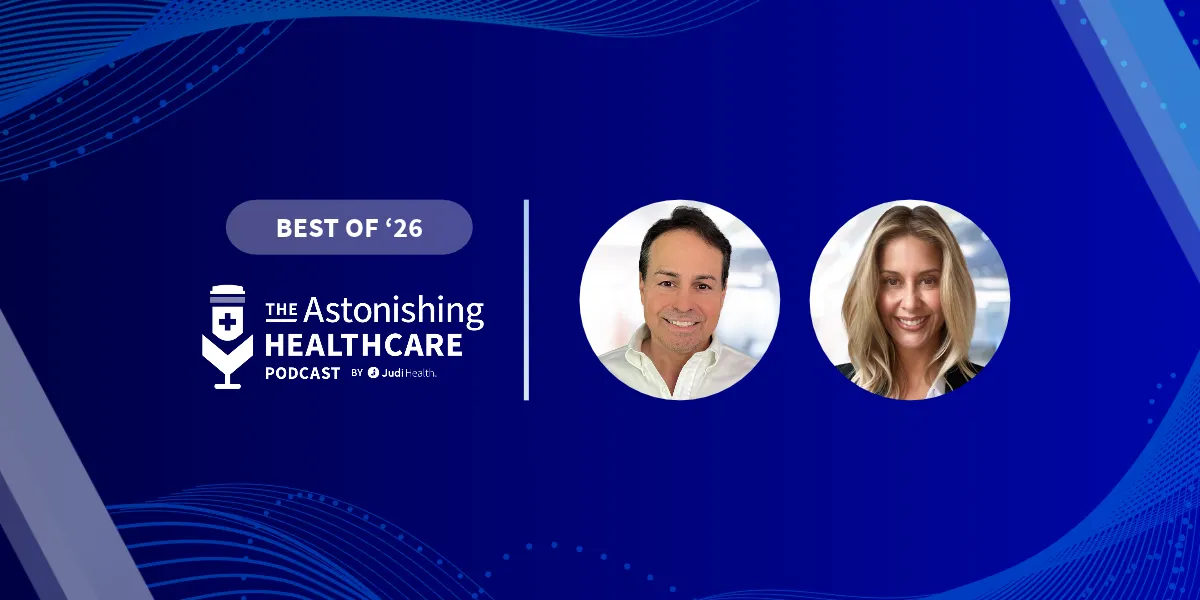
Best of '26! AH112 - From Transparent PBM to Unified Health Technology, with AJ Loiacono and Kristin Begley


Episode 112 Highlights
- The rebrand reflects an expanded mission, not a new one. Capital Rx launched as a transparent PBM, with "Rx" signaling its focus on pharmacy. Over eight years, the company broadened its administrative capabilities, including medical claims processing, and much more - all powered by Judi. Thus, the primary brand: Judi Health, with services harmonized as Judi Rx (pharmacy), Judi Care (medical administration, TPA, navigation), and Judi Cloud (platform licensing for health plans and TPAs).
- There's a real difference between "little T" transparency and true transparency. AJ argues that true transparency means an auditable workflow: full disclosure of all compensation, proof that every customer receives the same pricing and benefit, and no hidden earnings. He calls out the "little H" holding company trick and explains why alignment yields better outcomes for plans and their members.
- Nobody had built unified claims processing before. AJ recalls initial skepticism around unified claims. His response: "If Netflix had kept mailing DVDs, we wouldn't be talking about Netflix." To date, no other organization has built a unified claims processing platform. Judi is the exception.
- Unified claims processing will become the standard. Once employers realize they have options, markets shift quickly. AJ, who predicted the rise of transparent PBMs, makes a new call: unified claims will be the industry norm.
From Transparent Pharmacy Benefits to Unified Health Benefits Administration
Episode 112 of Astonishing Healthcare most definitely fits the criteria for a "Best of" episode. It quickly shot up this year's list of most downloaded, streamed, and watched episodes (across platforms), which is always nice to see, but it's also a fun discussion about our rebranding and was the first time we had Judi Health CEO AJ Loiacono and our Chief Commercial Officer, Kristin Begley, PharmD, on the show together.
Everybody knows we're walking to the drumbeat of transparency these days. The news this year has all been so encouraging, and the evolution of the pharmacy benefits model is very real. Everyone's trying to reduce friction and control costs, improve access to medication for patients and plan data for fiduciaries, and so much more. One question that always sticks with me: Once you can see where the money goes, what can you actually do differently?
During this episode, AJ and Kristin took that question beyond pharmacy. What could change if we had a clearer picture of what's happening across both pharmacy and medical benefits? What if everyone could just focus on patient care and not worry about extracting more value from a plan? And how are we working and evolving, given the market forces?
Thank you, thank you, thank you!
We must express a huge thank-you to everyone for listening and for sharing episodes of Astonishing Healthcare.
Thanks to my colleagues for taking the time to share your expertise and insights. And a special thanks to the guests who joined us from outside Judi Health. You bring stories from your own work, challenge assumptions, and help make everyone smarter. The show is way better for it, so thank you. Thank you, thank you, thank you." - Justin Venneri, Senior Director, Communications
We're heading into 2027 with a lot of momentum and optimism. Employers are asking sharper questions about what they pay for covered services, and hopefully we can all make benefits a little easier for people to use, too. For whatever part we play in that, we're grateful.
Related Content
- Judi Health™ Announces Capital Rx is Now Judi Rx™, Launches Judi Care™ and Judi Cloud™ to Power the Next Era of Health Benefits Administration and Patient Care
- AH100 - The End of the Age of Confusion, It's Time for Acceptance, with AJ Loiacono
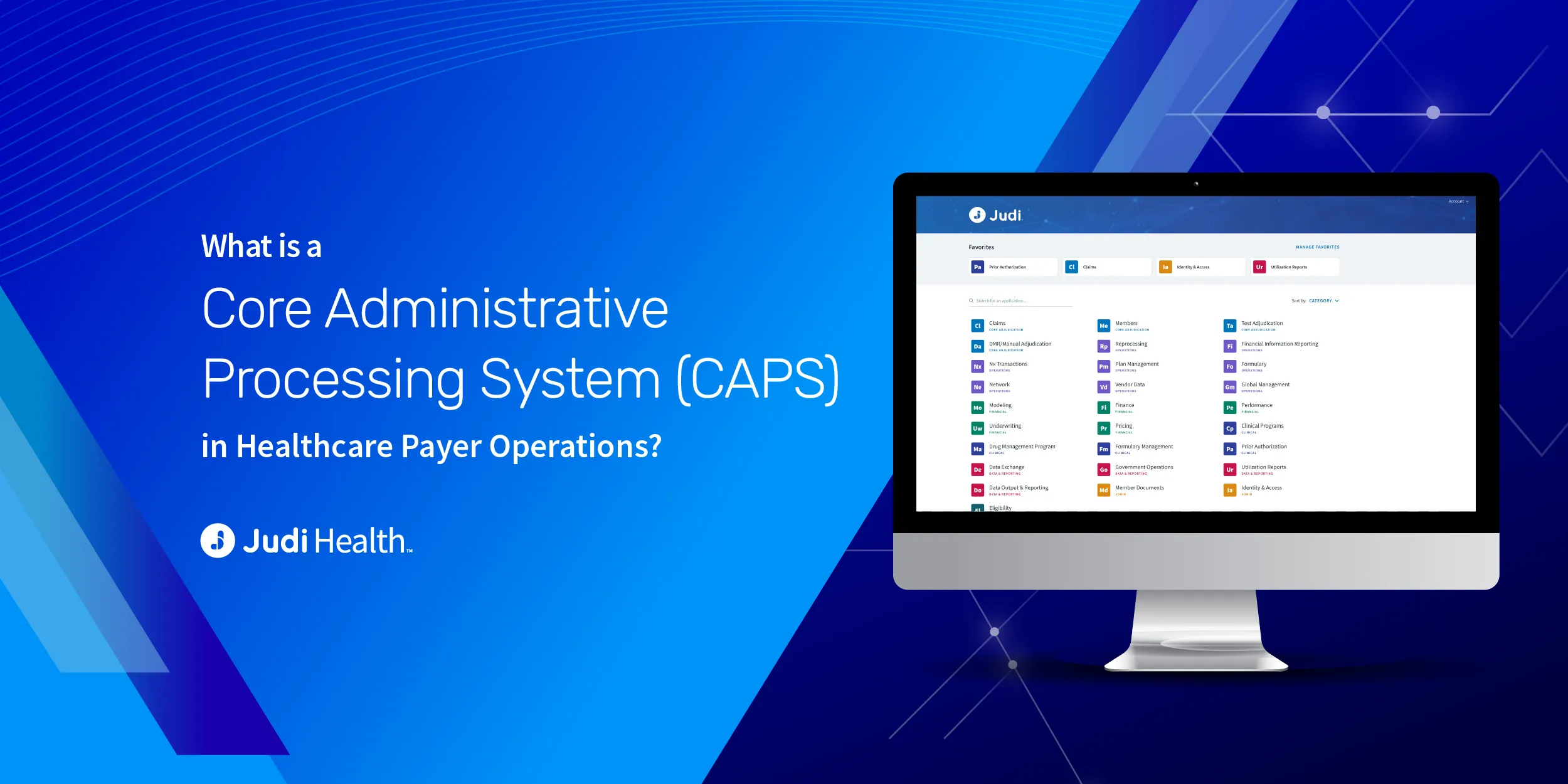
- What is a Core Administrative Processing System (CAPS) in Healthcare Payer Operations?
- AH111 - Building a Single Source of Truth for Medical and Pharmacy Benefits, with Kevin Sundquist & Liya Lomsadze
- What is a PBM? Understanding How Pharmacy Benefit Managers Work
- Achieving Alignment with Your Pharmacy Benefits Manager (free eBook)
Get in touch with our team if you'd like to learn more about our support for the new DOL rule and our transparent, aligned pharmacy benefits solutions!

Lightly edited for clarity.
[00:22] Justin Venneri: Hey, everyone. It's Justin Venneri. Welcome to our first Best of '26 episode of Astonishing Healthcare. We'll probably do another one of these toward year's end, and we'll be back with new content for episode 122. But this episode we're featuring really took off after our rebrand announcement, and it's a really fun discussion. It was the first time we had AJ Loiacono and Kristin Begley on the show together, which, with the benefit of hindsight, I'm pretty mad at myself about. But there's more to come on that front, so stay tuned and bear with us. I think everybody knows we're walking to the drumbeat of transparency these days.
The news this year has all been so encouraging, and the evolution of the pharmacy benefits model is very real. Everyone's trying to reduce friction and control costs, improve access to medication for patients and plan data for fiduciaries, and so much more. One question that always sticks with me: Once you can see where the money goes, what can you actually do differently?
During this episode, AJ and Kristin took that question beyond pharmacy. What could change if we had a clearer picture of what's happening across both pharmacy and medical benefits? What if everyone could just focus on patient care and not worry about extracting more value from a plan? And how are we working and evolving, given the market forces? Just one last thing from me: I really need to express a huge thank-you to everyone for listening and for sharing episodes with your colleagues.
Thanks to my colleagues for taking the time to share your expertise and insights. And a special thanks to the guests who joined us from outside Judi Health™. You bring stories from your own work, challenge assumptions, and help make everyone smarter. The show is way better for it, so thank you, thank you, thank you, thank you.
And we're heading into 2027 with a lot of momentum and optimism. Employers are asking sharper questions about what they pay, and hopefully we can all make benefits a little easier for people to use, too. And for whatever part we play in that, I'm grateful. So I'll stop now. Happy Thanksgiving weekend, and here's episode 112.
Hello, and thank you for tuning in to a special episode of the Astonishing Healthcare podcast. Hopefully this is a nice surprise between biweekly episodes. I know I'm excited to have two of my favorite guests here for the first time together, actually, which is astonishing to me. So, I have Judi Health CEO AJ Loiacono and our Chief Commercial Officer, Kristin Begley. I think it's probably just a function of your travel schedules that's made it impossible to get you both on the podcast together. But thank you so much for joining me today. Thank you for having us. Okay, so last time you were on the podcast, AJ, we walked through the ages of indifference, confusion, and acceptance. That was a fun episode for number 100. And Kristin, you're an OG podcast guest, too. Last time you were on, we discussed the shift in demand and potential appeal of unbundling and an agnostic, aligned benefits model and how that works. A whole lot has happened recently, so we had to do this, and that includes our official rebranding, the catalyst for the special episode.
There's also been a flurry of regulatory activity, more movement by the big three to present themselves as transparent, and some consolidation among smaller players. So it's a great time to have you both back on the show. AJ, let's just start off with the rebrand. We announced the quote-unquote start of this around our Series F and Charlotte Hornets partnership. Can you share your view on the evolution here? What led us to this point?
[03:22] AJ Loiacono: Yeah, of course, Justin. So, we started the organization, I often say, to fix the problem. We had to become the problem, become the PBM. And as a transparent PBM, our name was Capital Rx, the Rx designation representing our focus on pharmacy benefits. Over the last eight years, we've obviously broadly expanded our services to include not just pharmacy services, but now also medical benefit administration, payments, and other areas. And so, as we expanded as an organization, it became clear we needed to move beyond the Rx designation of pharmacy only and move to health to broadly represent all of the services that we do and deliver. And so, Judi Health became the parent company name, and then we started to harmonize all of our divisions within Judi Health. So Capital Rx, we're proud to state, is finally being rebranded as Judi Rx™. I say “finally” because when you operate in all 50 states across Medicare, Medicaid, commercial, fully insured, and self-insured, unwinding those designations takes quite a bit of effort and work. So, obviously, I want to take a moment to acknowledge the effort not just of marketing, but also legal and compliance. The other area, obviously, is Judi Care™, which is our medical administration. So, these are services around TPA, benefit administration, payments, navigation, et cetera. And then Judi Cloud™, which is for our enterprise customers, typically TPAs and health plans that want to license the Judi® platform. If you think about it, everything is a reflection of Judi. Judi is short for adjudication, and she is the brains of the organization. So, what better name and brand to highlight than the genius behind all of those workflows and tens of millions of claims that flow every month?
[05:25] Justin Venneri: Got it. And Kristin, why is it so important today? And as our commercial and marketing leader, what does this mean to you?
[05:31] Kristin Begley, PharmD: I would say, from a customer perspective, the most important thing to understand is the mission hasn't changed. It's our ability to execute that has expanded. Many people still thought of us primarily as a PBM, and the reality is we've been quietly building the infrastructure for almost five years for this much bigger transformation in healthcare. And this evolution unifies the enterprise healthcare solutions under a single, cohesive brand identity. We're really excited about the future, and we're going to talk about a lot of fun things today.
[06:02] Justin Venneri: Oh, yeah. So, making this move now, what could you share about the process? Kristin, if you want to take that first.
[06:08] Kristin Begley, PharmD: I'd just say our clients had increasingly been asking us to solve problems beyond pharmacy. Some clients actually gave us this idea years ago, to start doing this because of their outcomes and results and patient satisfaction, and truly lowering costs. So, healthcare doesn't experience pharmacy, medical, dental, and vision separately. Patients experience healthcare together, in aggregate, and our brand needed to reflect that reality. So, the technology was already there. The capabilities were already there. Now the brand simply catches up to the vision.
[06:38] Justin Venneri: Got it. AJ, there are a lot of players out there, more than ever before, claiming that they're quote-unquote transparent. But you wrote an article on LinkedIn. We'll link it in the show notes, of course, along with your former episodes and some other good stuff. But there's a pretty big difference between little-t transparency, as you called it, and true transparency. Can you talk to us a little bit about that and why it's so important to understand this distinction in the context of broadening the services to try to address benefits beyond pharmacy benefits?
[07:04] AJ Loiacono: Well, let's start by stating the facts here, which is, when we started this company, we were very unpopular in our opinion that transparency matters. Fiduciary responsibility for the ultimate payers matters. I would say abiding by ERISA, if you're an ERISA-based plan, on both disclosures of compensation, plus, obviously, responsibility to your members. It was a very unpopular topic, and we had to fight every day of every week, I would say, for a period of almost seven years. And a combination of the amendment to the Consolidated Appropriations Act that obviously amended ERISA Section 408 triggered, I think, the beginning of what I would say was brokers and consultants rethinking the importance of this topic, and employers rethinking the importance of it. What I like to point out is that we won the war.
Everybody is converting to our model. Suddenly, everybody's transparent. But the point here, more than anything else, is there's a huge difference between transparency and what I would say is an auditable workflow that demonstrates not only full disclosure on all compensation through assets owned or flow of funds to benefit your organization, but also the ability to demonstrate all of your customers are receiving the same pricing and the same benefit. Because there shouldn't be any difference if you're truly transparent. There should be no difference between big and small. Also, if you were making money in this manner, you should be restating your earnings as a publicly traded company. We'll wait to see that. But I think, more importantly on this topic, even entities that are newer entrants to the industry or mid-tier PBMs, they claim to be transparent. And I feel like we should do an entire segment on little “H,” holding company. The little trick of, I have a holding company, and that flows through the rebates or that flows through the reimbursements, and then I dole out the payments to the operating PBM. And the PBM gets to say, “I am transparent, and I can show you that I passed through 100% of what I received.” I go, “You sound like a traditional PBM,” and nobody asks questions. E
veryone just assumes transparency is universal, some sort of magical standard that, if you just say “transparency,” you are. So, yes, I continue to be, what I would say, a staunch advocate for transparency, but true transparency. And I am going to put all of our competitors to the test.
[09:40] Justin Venneri: Kristin, what would you add there? What else should plan sponsors know about this test, whether it's questions they should ask or things to be aware of? What else do we need to talk about when we're talking about this transparency discussion?
[09:51] Kristin Begley, PharmD: So, 1,000% agree with AJ on all of his points. And I would just add one thing I think is missed: Even if they do true transparency, as AJ describes, it's only valuable if the incentives are aligned. Meaning, you can disclose a lot of information and still have a business model that benefits when costs go up. You shouldn't be with a partner that makes more when you spend more, even if it's transparent. I think employers were asking, “Can I see it?” Now they're asking, “Can I trust it?” So, transparency is visibility. Alignment is accountability. And seeing the math is important, but making sure nobody profits from the wrong answer is even more important.
[10:32] Justin Venneri: That's a great point we've discussed on the podcast before, many times, honestly. You've mentioned specifically how you left the PBM industry due to what it was turning into, but you've returned to join the mission here. What has it been like for you to watch Capital Rx evolve into Judi Rx, and then Judi Health evolve from Judi, to see our platform evolve the way it has?
[10:51] Kristin Begley, PharmD: So, I'll start with: I am a pharmacist. It was a very difficult decision to leave the PBM industry and go into navigation and women's health. I didn't leave the pharmacy industry because I stopped caring about healthcare or PBMs. I left because I became frustrated with a system that often rewarded complexity. It's a mirage of value. The deals that look too good to be true, they are too good to be true. These prices or deals don't even exist. So, what brought me back, besides being able to work with one of my mentors again, AJ, and many other people he had hired along the journey whom we met, was the opportunity to build something that was fundamentally different. I get to wake up every day knowing that we represent what's ultimately improving healthcare and patient experiences, and that's a special place to be. Your job matters, and you are making contributions to the world. So, every time a client tells us they finally understand where the money's going, that's a win. And every time a member's experience gets easier, that's a win for me, too. The pharmacist in me loves that.
[11:52] Justin Venneri: That's amazing. It's always fun to hear from our clients, either how implementation goes smoothly, or how they feel like their members are better cared for, or just that they have more control over their plans. So, it's definitely a good thing.
[12:03] Kristin Begley, PharmD: I'll add one more thing. What's really exciting to me is that we've proved transparency could work in pharmacy, and now we're asking that much bigger question: What happens when you apply those same principles across healthcare? And frankly, it's the same on the medical side. Fake prices with fake discounts equal fake value on the spreadsheet and, for patients, drive costs up. So, I'm really excited about creating a better experience that costs the system less. And we're going to get rid of some rent seekers in the system, as AJ loves to call it.
[12:30] Justin Venneri: That's a perfect transition. Thank you for adding that. Because, AJ, many people balked initially, and you talked about how much of a street fight it was on the PBM side of things to grow the business and gain acceptance. People didn't really love the idea, or they liked the idea but didn't think it was possible to build and deploy a unified claims-processing system. Now that we're on the other side, with Judi powering a unified experience, why do you think there was so much disbelief or resistance to that idea, and what are we doing about it?
[12:57] AJ Loiacono: Yeah, I always want to say the disbelief was at the highest levels in our organization. My board of directors—we'd been a PBM, I think, at that point for maybe four years, and we were having very good growth. It was an excellent business by any measure during that period. And I remember presenting strategically to my board of directors that we were going to invest in Unified Claim. I had to explain this concept to them, and I was not greeted with warmth and acceptance, let's just put it that way. And I've talked about this before: Your board is obviously there to govern you, challenge you, and support you. I think, at first, the natural reaction for a company that was still very young was, “You're becoming a great PBM. Why don't you just stick with that?” And my response was, “If Netflix just kept mailing me DVDs, we would not be talking about Netflix anymore.” And I think, in the modern age—I talk about this all the time—the speed at which technology evolves and patient requirements evolve means that you, as an organization, must keep up with that velocity and pace.
And so, for me, it was a natural evolution because, once you understand how claims are administered in the United States, it's a spaghetti chart of sorrow. I almost feel so sorry for the providers and the abrasion they face, be it on the prescribing side or even on the procedure and care side. You see it with the pharmacist. You see it with the plan and the patient. A lot of it is incurred by far too many vendors that are rent seekers touching these claims. So, I go back to the beginning: I had to convince my board of directors that this was a reasonable step. I would like to say it was a very shrewd strategic plan. And I use the word “shrewd” because, for us to truly transform healthcare, I go back to zero dependency. I find that not too many people have earned my trust or our organization's trust over the years. And so, for us, we needed to build out this full suite of applications and services, not just for ourselves, but for the plenty of absolutely wonderful partners I want to empower and give those tool sets to. We work with TPAs, regional health plans, and Blues plans. I think they are very good actors, and they just require additional tool sets to deliver better care, better service, and better insights more efficiently across those services. But going back to my board, it was not fun.
You asked the question: Why did people believe this was a difficult decision or a challenging idea? And the reality is, no one had ever done it before. I remind everybody listening to this podcast that nobody in the history of this country had been processing medical, pharmacy, dental, vision, et cetera, ancillary benefits on one system with eligibility, benefit administration, TPA payments, et cetera. It did not exist and still does not exist, with the exception of the Judi platform. So, immediately, when you go to an investor or any governance committee and say, “I would like to attempt to do X,” and no one has ever done it before, and there are multibillion-dollar companies—Fortune 10 companies, need I remind you, Cigna, CVS, UnitedHealth—that have never done this before, why are you the one who will do it? Why is your organization capable of this? And I go back to something Kristin said earlier: alignment. Our mission is to give our country the infrastructure we need for the healthcare we deserve.
I am asked all the time to define U.S. healthcare. And I define U.S. healthcare, unfortunately, as an arbitrage on patient ignorance. And it has been managed that way by incumbent and legacy healthcare health plans, often publicly traded ones. And it's sad. It's a highly opaque, complex process. I don't care if we're talking medical or pharmacy, because the more opacity and complexity, the more the patient becomes, unfortunately, an uninformed price-taker. And it's the reason why it's the number one cause of bankruptcy in this nation. People are fearful of using healthcare. Why should you be afraid of getting healthier or being taken care of? And that has tugged at my soul since the moment I entered the payer space. And I am proud of the commitment of my investors, my colleagues, and the execution of all of our teams to bring us to this point in time and to say we are going to usher in a new era of better care, more help than anyone has ever received. I often say a lack of patient confidence is why we have substandard care. This is completely taken care of when you get rid of the opacity, the complexity, and the self-interest at the center of healthcare, and focus on what really matters: providing the highest level of care and insight for patients at the lowest available price point, free of any third-party encumbrance. Full stop. And I'm excited about that. And we're doing it. And we'll talk more about that, I'm sure.
[18:09] Justin Venneri: Yeah. Kristin, mentioning these expanded capabilities, focusing on the core of pharmacy benefits, and then we have these expanded capabilities: Is there something that pops up in your discussions with prospects or clients where they're like, “You know, I do see how these things are being done two, three, four times for different benefits. Maybe I can pull that all in”? How are those discussions going, just out of curiosity?
[18:29] Kristin Begley, PharmD: Well, I think this is like, if you think about the olden days, when they said the world was flat and then someone actually figured out that the world was round. Sometimes resistance isn't because something can't be done. It's because it challenges assumptions that have always existed. For decades, people have become accustomed to separate systems because that's how healthcare grew up, not because it was the best way.
So, no one would intentionally build fragmented healthcare with a bunch of rent seekers, pay too much money, and have a bad experience if they were starting from scratch today. And I think that's one of the things that AJ is really visionary about: hiring people from the industry who said what made their jobs hard and inefficient. Here's your blank sheet of paper. We're going to do this the right way. And once clients see pharmacy, medical, eligibility, all of these things operating together, and what that feels like, when you call one call center and don't get transferred to another, it is hard to imagine going backwards. So, it's been really fun.
[19:26] Justin Venneri: Cool. And AJ, you often tell the story, thinking back to when it was just you and a handful of others in the small office, with a plant over your shoulder in the Zoom background here. What do you reflect on as you see us evolve and Judi Health continue to grow?
[19:37] AJ Loiacono: You know, I go back to my original thought: When we started this company, the mission was very clear. It was evident to me that none of the major players wanted to act appropriately and deliver a truly transparent benefit solution to the market. And so, in order to fix the problem, we must become the problem, become a PBM. And you start with that mission. The mission at the time was to change the way drugs are priced and patients are cared for to create enduring social change. And I go back to my prior point. I believe in this concept of enduring social change because a patient should never be confused or taken advantage of at the pharmacy register or the point of care. But, unfortunately, that has been the business model for 30 years in the United States, and it has only become worse and worse.
And so, when we started back in that small office—the windowless office, I'd like to add—on Canal Street in New York City, we never envisioned the organization would reach the size and scale, and address the surface area of healthcare services, that we do today. But it doesn't necessarily surprise me when I reflect. And the reason why is that I genuinely believe, if you have the experience and the expertise, you have the passion and discipline, and you surround yourself with equally talented people who embrace your mission, there is no limit to what you can accomplish. And this has been shown with hundreds, if not thousands, of U.S. businesses over the years. I don't care if we're talking, you know, sneakers to semiconductors. Again, it comes back to being able to have the discipline. And this is one thing that I kind of stitch back into transparency. Part of that discipline is not taking the gray dollars. I know everybody in U.S. healthcare at this point, based upon my age and tenure and everything else in the industry. I'm just like an old soul in healthcare, I often joke. It's interesting. I will speak to executives at companies that provide similar or identical services, and they're like, “Why don't you just take them? Just take the rebate dollars. Take the spread. Yeah, submit those claims that you shouldn't be submitting for rebates.”
And I'm like, “I refuse to do it.” Because the moment I take the gray dollars, you're, one, addicted to that money. Your board expects the revenue. Your budgets are built around it. But, more importantly, you've become like everyone else. That's a huge part of this journey. I go back to the people who joined us on this mission: the executives, the associate level, our investors who believed in the importance of our mission to truly improve and revolutionize healthcare. I go back to all of that, and I think, for us, when I reflect upon the days of the windowless office and the plant, yeah, we've come a long way. But it doesn't surprise me when I think about the talent we've assembled and the heart that we have at this company. We are a compassionate, caring organization. And I can say everyone who works here, whom I've interacted with or hired, believes in the same principles that I believed in that very first day with that little plant.
[22:53] Justin Venneri: Got it. And just a couple more questions for you both. Thank you for taking the time today. Of course, the most astonishing question. Let's go with the rebrand. What's the most astonishing or surprising thing to you, AJ, about the rebrand and the effort thus far?
[23:05] AJ Loiacono: I go back to my original thanks. It's easy to say, “Hey, we're going to rebrand Judi Rx.” To execute on that promise is something completely different. And I have an entirely different level of respect for everybody who was involved with that process because of what an enormous undertaking it was. I often point out—and now I think people understand this—there are legacy healthcare company names that still exist where you'll have a parent organization and three or four differently named companies underneath that legacy healthcare company. And now I think I understand why, because the amount of care, execution, compliance, and legal work required to get it done is enormous. So, again, I celebrate the contributions from marketing, compliance, legal, communications—tactically, anyone who worked on this. And if I'm overlooking someone, I genuinely apologize.
But, again, a huge undertaking. And back to the Judi name: We always knew Judi was the heart and soul of this company, and she would become the name. I think it's very funny. One of our investors—I'm going to call her out—Holly Maloney at General Catalyst, when I first presented Capital Rx to her, her exact comment to me was, “Capital Rx, like, I love your business model. I love your passion, your expertise, and how you're executing. We absolutely hate the name.” And I said, “Well, stick with us. We are going to obviously move to Judi Health and Judi Rx. It's going to take us some time.” And it was actually quite funny because it was almost in that moment she was like, “Okay, we'll partner with you then.”
[24:50] Justin Venneri: That's great. Kristin, same question to you. What's been most surprising or astonishing, but maybe with a little twist from a marketing and sales perspective, a reaction or something you've reflected on since we started this and then finally announced it?
[25:02] Kristin Begley, PharmD: So, I was just at a sales pitch yesterday, and I'd say the most astonishing thing for me is how quickly people understand it once they see the whole picture working together. I feel like the market is finally ready for the conversation that AJ and I, and all the other executives, have had for years. On a personal note, I would say that, to me, Capital Rx represented courage. It represented a company that was willing to challenge assumptions that most people thought were just untouchable. And Capital Rx really showed what was possible in the industry. And Judi Health is expanding that into what is imaginable.
[25:36] AJ Loiacono: Yeah. I would like to touch on one additional point that Kristin brought up. In the United States, for the last 25-plus years, pharmacy and medical have separated like continental drift, but accelerated, in the sense that pharmacy is on its own separate island with its own separate consultants and its own separate support team. Medical is on its own different continent or island with its own separate teams, consultants, and brokers. And I'm like, care is care. When I'm speaking with a nurse practitioner or a physician and it involves both a procedure or some sort of care and then a prescription, they don't leave the room and I'm introduced to a new group of people. Your benefit is your benefit.
The moment you see pharmacy, medical, dental, vision, eligibility, and accumulators all operate perfectly in real time, you are never going back to the spaghetti mess of member, provider, and plan abrasion. I guarantee it. This will be the standard going forward, the same way I made a prediction eight and a half years ago that transparent PBMs were going to be the standard going forward. Here I am. Let me help the industry again. Unified claim will be the standard, and you heard it on this podcast.
[26:54] Justin Venneri: I was about to ask you for a prediction for the next three to five years, but you just beat me to it. I think we have it, unless you want to throw out another moonshot.
[27:03] Justin Venneri: Give us a moonshot, Kristin.
[27:05] Kristin Begley, PharmD: I think once employers realize they have options, markets change quickly, and we're watching that right now. I think AJ's was better to end on, to tell you the truth.
[27:15] Justin Venneri: Well, you both have given us plenty to think about, and I really appreciate you taking the time. So, thank you for joining me in the studio, both of you for the first time, and I look forward to having you back, either separately or together, in the future.
[27:27] AJ Loiacono: Yeah, we didn't have one fight on air. This is amazing.
[27:31] Kristin Begley, PharmD: Thank you so much, guys.
[27:33] AJ Loiacono: Thank you.