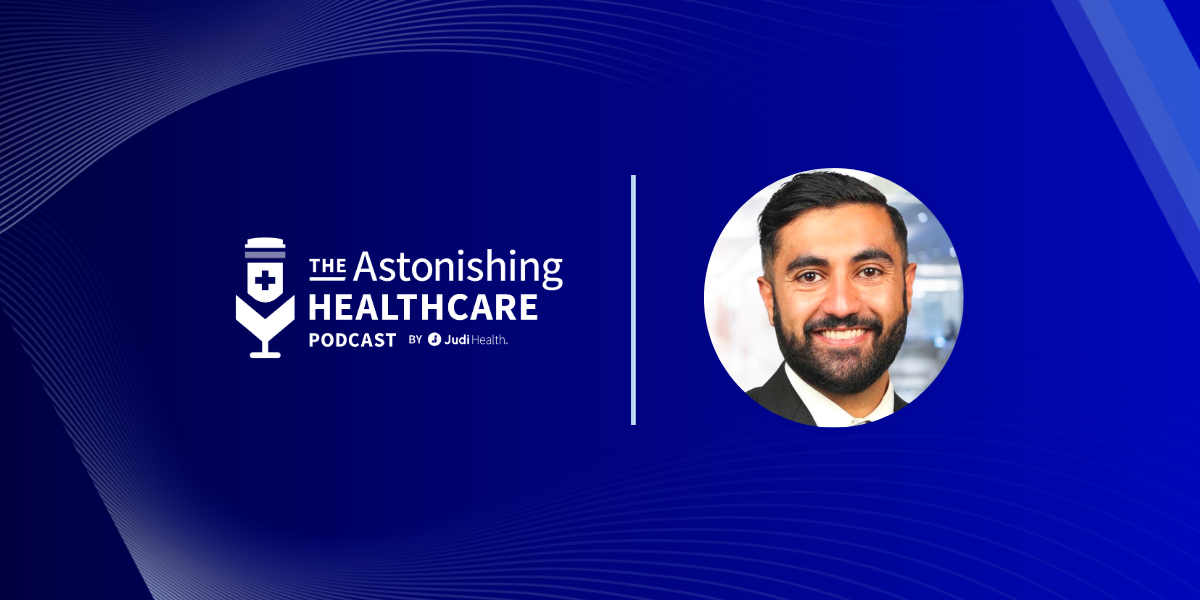
AH114 - How Employers Can Use Clinical Programs to Reduce Cost and Complexity, with Nash Albadarin, PharmD

.webp)


Episode 114 Highlights
- Proactive clinical strategies drive meaningful results and help build trust. For years, PBMs waited for clients to flag a spending problem before responding. Judi Health™ is flipping that model, scrutinizing claims data so the team can bring vetted solutions to the table or contact plan members before red flags appear.
- The results are concrete and substantial. Recent biosimilar conversions drove $130,000 in annualized member savings and $850,000 in annualized plan savings, while Rx Ally cut short-acting opioid day supply by 14.3 days for enrolled members.
- Shifting care from medical to pharmacy - and the site-of-care - yields surprising savings. A newer clinical program, CareShift Health, optimizes site-of-care and shifts select medical drugs to the pharmacy benefit for a lower net cost.
- Unified data unlocks hidden savings. Medical and pharmacy spend have traditionally lived in separate silos. When you compare them side by side, the excess billing and administration costs tied to provider-administered drugs become clear, and clients are often "blown away" by what they find.
For years, the model for clinical programs was reactive: a client would flag a spending issue, and the pharmacy benefit manager (PBM) would scramble to respond. But what happens when the script is flipped and the data is scrutinized before red flags appear?
In this episode of the Astonishing Healthcare podcast, host Justin Venneri welcomes back Nash Albadarin, Associate Director of Clinical Programs at Judi Health™. A pharmacist by training with over 10 years of experience in the PBM industry, Nash returned for his third appearance on the podcast.
The conversation covers what a consultative, data-driven clinical programs strategy looks like in practice, supported by measurable results: hundreds of thousands of dollars in savings, reduced opioid exposure, and a new site of care optimization program already gaining attention.
What Does Clinical Programs Business Development Actually Involve?
Nash recently stepped into a new role that’s designed to bring clinical expertise into the earliest stages of a client relationship. Rather than waiting until a problem surfaces, Nash works directly with clients and prospective clients to help them understand their options before decisions get made.
His background is heavily clinical. He completed residency training in Medication Therapy Management (MTM), spent over a decade in PBM clinical operations, and has supported programs like the Drug Management Program (DMP) and MTM on the government side, particularly with Medicare.
What excites him most about the role is building strategy around each client’s specific situation. As he explains:
"Every employer population is different and our goal really is rather than simply presenting our broad scope of services and our programs, really making sure that we provide consultative strategy."
That means digging into a client’s data, running analyses, and constructing a clinical strategy that fits both their financial goals and their members’ needs.
Why Has Clinical Consulting Become So Important?
It’s no secret that healthcare has grown increasingly complex, and employers feel that complexity. Nash points to three different pressures that are driving a shift toward consultative clinical programs:
- Rising specialty drug costs
- Increased utilization and chronic disease growth
- A rapidly expanding marketplace of healthcare solutions
With so many options available, including direct-to-vendor solutions, clients can easily feel overwhelmed. Nash sees his job as reducing that complexity and acting as a trusted advisor who translates a crowded market into clear recommendations.
Pharmaceutical Strategy Group’s (PSG) recent specialty trends report shows that specialty costs are projected to climb by over 30% by 2028. That’s a problem that’s worth getting ahead of.
Prioritizing a Proactive Clinical Programs Approach
The core of Nash’s approach is proactivity. Instead of waiting for a client to raise an alarm about spending, his team evaluates the data early and brings solutions to the table before problems escalate.
“Before a client throws up a red flag and says ‘my XYZ spend is up’, we have solutions that we’ve already evaluated that we can bring to the table,” Nash explains.
For new clients, this starts at the beginning of the relationship: reviewing what they already have, identifying gaps, and finding where Judi Health can either leverage existing solutions or fill in what’s missing.
What Questions Should Clients Ask When Evaluating Clinical Programs?
Beyond reading the data, Nash encourages clients to focus on a few key points:
- What problem are you actually trying to solve? GLP-1 spend is a common concern, but Nash pushes clients to isolate the real issue. For example, is it diabetes spend, or weight loss spend?
- Are there specific members you want to focus on? Identifying priority populations helps shape the overall strategy.
- How will you measure success? Outcomes vary by program. An adherence program measures adherence and long-term savings, while a deprescribing program looks entirely different.
However, Nash warns that it’s easy to get swept up in evaluating features and functionalities, especially in crowded spaces like cardiometabolic care, instead of focusing on the actual healthcare outcome.
“It can be easy to get swept up in the whirlpool of that...instead of looking at, truly, what’s the actual healthcare outcome? What’s the results that you’re going to drive?”
How Does an Agnostic Approach Build Trust with Employers?
Trust is a persistent theme in healthcare, especially within the PBM industry. From Nash’s perspective, there’s a refreshingly simple solution for this theme: transparency.
He describes himself as the least salesy person you’d find in business development, and he leans into that. His approach gives clients frank, unbiased recommendations, even when that means telling him something isn’t a good fit.
“I tell you what’s good. I tell you what’s bad,” he said. “And quite honestly, if the recommendations aren’t good for you, we just don’t recommend them or we tell you.”
Since Judi Health’s model is vendor agnostic, the team has no preference about which solution a client chooses. They can recommend an internal program or point a client toward an outside option, offering a clear, unbiased view of the market. That objectivity, Nash says, has built significant trust.
Where Judi® Fits In with Clinical Program Strategy
Our enterprise health platform, Judi, runs throughout the entire process. The team pulls real-time claims data directly from Judi to make quick, informed recommendations.
That real-time access is what makes the proactive model possible: the moment the team spots an opportunity, they can bring it to the client.
What Results Are Clinical Programs Actually Driving?
During the discussion, Nash shared several examples that show what consultative clinical work can accomplish.
Rx Smart Save: Biosimilar Conversions
The Rx Smart Save program identifies high-cost drugs and recommends lower-cost alternatives. Nash describes a recent client example involving members taking Stelara, a specialty medication.
Through education and consultation, the clinical pharmacist team reached out to members, discussed the biosimilar option, and coordinated the transition with both the member and the prescriber. The medicals were then dispensed and fulfilled by Mark Cuban Cost Plus Drugs.
The results, from just the past month, were striking:
- Five successful conversions from Stelara to a lower-cost biosimilar
- $130,000 in annualized member savings
- $850,000 in annualized plan savings
Critically, these switches didn’t impact member care. As Nash puts it, they simply lower the total cost of care for both the plan and the member.
"Combining that with the data analytics, with the clinical expertise, with the member advocacy, with the provider collaboration, that holistic approach really gets the best outcomes."
Rx Ally: Opioid Management Results
Nash was recently interviewed, alongside Lauren Carroll (Senior Manager, Clinical Programs at Judi Health) for an article in Managed Healthcare Executive about behavioral health support. The subject was Rx Ally, Judi Health’s opioid management program.
The program has existed since 2020, but it underwent a significant revamp in 2024 that expanded its scope of interventions into a higher-touch model. That expansion delivered:
- Members enrolled in Rx Ally had a short-acting opioid day supply 14.3 days lower than members without the program.
- The number of members with a daily morphine milligram equivalent (MME) of 90 or higher decreased by 11% over a six-month period.
- The average opioid day supply for opioid-naive members dropped by 37% over a 12-month period.
In short, this program reduced long-term abuse potential while still controlling pain and getting members the care they need.
What Is CareShift Health and Why Does Site-of-Care Matter?
The newest program in the conversation is CareShift Health, launched just a month ago. It’s a medical pharmacy benefit shift program combined with site of care optimization.
In plan terms, it moves certain medical drugs (often called “buy and bill” drugs, like specialty injectables and infusions) from the medical benefit over to the pharmacy benefit, with the goal of reducing unnecessary spend tied to provider-administered drugs and services.
The program works on two fronts:
- Medical to pharmacy benefit shift: Processing these drugs through more standardized pharmacy pricing achieves a lower net cost, while adding utilization management controls like prior authorization and step therapy that aren't always present on the medical side.
- Site of care shift: Transitioning members from expensive inpatient or physician clinic settings to lower-cost ambulatory infusion centers.
These two components are independent, but depending on a client's data, pairing them can produce better results.
Like everything else, CareShift Health runs on Judi. The platform proactively identifies members receiving high-cost treatments in inpatient or physician clinic settings, then uses claims data in partnership with medical claims data to confirm eligibility and medications.
From there, the team outreaches to members, confirms they meet the criteria, and coordinates the transition, working with prescribers, specialty pharmacies, and infusion centers to handle scheduling, delivery, and after care.
“The goal here is simple: maintain clinical quality while helping clients achieve more efficient care and delivery of these medications,” Nash explained.
The program focuses on high-value, lower-risk medications where disruption is minimal, including hemophilia products and anti-asthmatics like Xolair and Nucala. Oncology infusion drugs are currently excluded to avoid interrupting sensitive care.
Why Is Medical Spend So Surprising for Employers?
Nash explained clients have been “blown away” by the savings opportunities they see when they can compare exactly what a drug costs on the medical side versus what it would cost on the pharmacy side. The savings aren’t just on the drugs themselves, but also on the administration.
"These are typically siloed data sets and bringing them together has been incredibly fruitful eye opening to a lot of our clients.”
Nash noted that the challenge today isn’t access to data. Organizations have more of it than ever. The real value comes from digging in, comparing these traditionally separate data sets, and turning the findings into meaningful action. He encouraged every plan sponsor to look at their medical and pharmacy spend side-by-side and see how much excess billing and waste might be hiding.
Why Should Employers and Health Plans Should Shift to a Proactive Clinical Program Strategy?
As Nash stressed throughout the episode, the biggest opportunity in clinical programs today is the shift from reactive benefit management to proactive, consultative strategy.
The data is available, and the programs work. What’s often missing is the willingness to bring siloed information together and to act on it early.
Whether that’s converting members to biosimilars, safely reducing opioid exposure, or shifting infusions to a more efficient site of care, the common thread is a holistic approach that blends data analytics, clinical expertise, and member advocacy.
For employers and health plans, the practical next step is straightforward:
- Examine your medical and pharmacy claims together
- Isolate the actual programs you’re trying to solve
- Ask whether your current PBM partner is helping you get ahead of costs or simply reacting to them
If you want to learn more about Judi Health’s approach to clinical programs and unified health benefit management, contact our team today.

Lightly edited for clarity.
[00:23] Justin Venneri: Hello, and thank you for joining us for another episode of Astonishing Healthcare. As always, thanks for taking the time to listen today.
For this episode, we're talking about clinical programs again and highlighting some results, which should be fun. Nash Albadarin, Associate Director of Clinical Programs Business Development here at Judi Health™, is back in the studio. He was our guest back on episodes 43 and 69, and I've always enjoyed chatting with Nash on other content around our clinical programs. Whether it was a drug management program (DMP) or our medication therapy management (MTM) program, Nash has always been a great wealth of knowledge and has a wealth of experience in and around the space and the practical applications of these programs. So Nash, thanks for coming back on the show.
[01:01] Nash Albadarin, PharmD: Hey, thanks for having me, Justin. Excited to be back. Excited to be here for a third time and be part of the Three Timers Club.
[01:07] Justin Venneri: Let's go! We should get T-shirts.
[01:08] Justin Venneri: So you recently stepped into this new role. I described your title a second ago, and you're helping employers and health plans in some new ways. Tell us a bit about your background first, and then jump right into your new role. Clinical programs business development. What excites you most about that right now?
[01:22] Nash Albadarin, PharmD: Yeah, absolutely. So, as I kind of discussed previously in the prior episode, my background really has been a lot in PBM. I've been in the industry for over 10 years. I did my residency training in medication therapy management, or MTM, so I specialize in that, but I've been at a PBM for over 10 years. Much of that experience has been in clinical operations and clinical programs for most of my career. I've been with Capital Rx, now Judi Health, for about four years now, and I've supported clinical programs here as well, specifically more on the government side with Medicare, MTM programs, and DMP, and I have recently transitioned into Associate Director of Clinical Programs Business Development. Ultimately, this gives me the opportunity to work directly with clients and prospective clients earlier in their decision-making process, really to help make sure they have a good understanding of the opportunities and the scope of services that we can provide and how they fit into their healthcare ecosystem.
Now, what excites me most about this opportunity has been helping these organizations identify the right strategies that address their unique healthcare challenges. Every employer population is different. And our goal, rather than simply presenting our broad scope of services and our programs, is really making sure that we provide consultative strategies. So, understanding what the client's needs are, looking at their data very, very closely, making sure we're running analyses, and building a clinical strategy that aligns with their financial goals and also their member goals as well.
[02:42] Justin Venneri: That makes sense. Can you talk to us a little bit about how the role of clinical consulting has evolved in today's healthcare environment?
[02:48] Nash Albadarin, PharmD: Yeah, absolutely. So, as we all know, healthcare has become increasingly complex. Employers are facing rising specialty drug costs, increased utilization growth in chronic diseases, and an overall rapidly expanding marketplace of healthcare solutions. They have a lot of options, where they can either go direct with certain solutions. Our goal here is to reduce that complexity, simplify it, and make sure that they understand their options, whether that be looking at one of our solutions or looking at a solution outside of Judi Health, really providing them a trusted advisor. And again, that consultative strategy that translates all of these different options for them into really meaningful recommendations and helps clients understand which programs overall will help you achieve your goals, provide you the greatest impact to both your financials and your members, and make sure that it fits in with your overall clinical strategy. Our goal is to go beyond just a simple "you need an adherence program" or "you need a specialty program." It's really to look at your data, look at what your goals are, and look at the entire picture: where you're at today, what solutions do you have today, what's the best fit from an implementation standpoint and from a financial standpoint, and really make sure that we're working with you in tandem and providing solutions that fit your needs.
[03:59] Justin Venneri: So it sounds like we're trying to be more proactive once a client is on board. And I hear you on the specialty costs and the complexity. I know, shout out to PSG for their recent specialty trends report, meaning if we're going to have those costs go up by over 30% by 2028, we definitely have to try to step in and help, right?
[04:16] Nash Albadarin, PharmD: A hundred percent. One of the main goals, honestly, that I've had since stepping into this role has been really creating a proactive environment, being less reactive when it comes to working with our clients consultatively. The goal has been to make sure that we're always looking at clients' data, understanding where the gaps are, where the needs are, and really trying to get ahead of it so that before a client throws up a red flag and says "my XYZ spend is up," we have solutions that we've already evaluated that we can bring to the table. So very much so, it's a proactive discussion that we're having, especially for net new clients.
When you come on board with Judi Health, one of the goals that we have is to go through with you at the start of the relationship, explaining the solutions and understanding what you have coming in, so that we can either leverage existing solutions you have or see where we can fit in and address certain gaps that you may have. So the goal of mine has been to switch from less of a reactive approach and truly to a very proactive approach to the strategy.
[05:10] Justin Venneri: Okay. And when clients evaluate clinical programs, or when you help, what are the most important questions they should be asking? Aside from "what's our data saying?" of course, assuming they have their data or someone who can work with them on it.
[05:20] Nash Albadarin, PharmD: So when we talk to clients, we try to focus the conversation on a couple of key points. One is truly, what problem are you trying to solve? GLP-1 spend, for example, is an issue for a lot of folks. And so, really isolating within that, what is the issue there? Right? So isolating, is it your diabetes? Is it your weight loss spend? Trying to really drill down to what exactly is the problem that you're trying to solve, and we can help you identify that right from a pharmacy perspective, but really nailing in and honing in on what the true issue is that we're looking to resolve. If you have specific members that you want to keep in mind or consider and you want to focus in on, that also helps us. And then, outcomes measurements.
So, this is something that we can also help gear you toward and provide some better understanding within every program: the outcomes and what you're going to be measuring. The success varies across every single program. Right? Adherence programs will focus on adherence and more long-term savings. We also have the deprescribing program, for example. So the outcomes for that are going to be quite different than an adherence program. So how you measure success is going to be key and critical, and we can help orient you into those different facets. Some clients end up evaluating a lot of different features and functionalities from vendors. For example, in the cardiometabolic space, there are quite a lot of players in that space. And so some of our clients may end up evaluating certain features that may not be as critical and, honestly, can be easy to get swept up in the whirlpool of all the different features and capabilities, as anyone evaluating any service they're going to purchase would. Instead of looking at truly, what's the actual healthcare outcome? What are the results that you're going to drive? What are you trying to address? The members, like we said, again going back to those three points that you're trying to target.
The nice thing is that at Judi Health, we're truly agnostic, and so we have no preference as to where a client wants to end up or what solution they want to utilize. So we can provide a very unbiased, truly consultative strategy of what we have, and we have some great solutions. But there's also definitely the option, if you want to leverage outside solutions, we're open to that. And so we're very willing to provide you an unbiased, clear view of the market as it is for whatever your needs are.
[07:14] Justin Venneri: That's great. And that makes sense. I know a big theme has been, for years, "rebuild trust" or "build trust" in healthcare, and in particular in the PBM industry. So I'm curious, Nash, how do you try to build trust with our clients here and help them make informed program decisions, program elections, analyze their data, et cetera?
[07:32] Nash Albadarin, PharmD: Yeah, it's a good question. I will say our approach, like I mentioned, is highly consultative. And the thing that I've found success with, I work in business development, but I will say I'm probably the least salesy salesperson, or the least, least person you'd see in business development. I'm truly quite clinical. My background is a pharmacist by training, and my approach is to provide you transparent recommendations. That's how I've built trust, honestly. I keep it pretty frank. I tell you what's good, I tell you what's bad, and quite honestly, if the recommendations aren't good for you, we just don't recommend them, or we tell you.
My approach has been to be pretty transparent and open about it if I don't think something is a good fit that you may have interest in. We'll definitely let you know about that, and you can make the decisions ultimately. But I've found a lot of success, like I said, just providing that clinical expertise, true transparency, and unbiased recommendations. And ultimately we try to leverage that along with guiding our clients to ask the right questions. So making sure that they're understanding the population, looking at their claims data with them, and looking at the cost drivers for wherever the spend is. Let's try and tackle that, and so we pull all this data for them and prioritize these different strategies.
[08:35] Justin Venneri: It sounds like you want to get at where the gaps or opportunities are objectively.
[08:38] Nash Albadarin, PharmD: Yeah, no, that's exactly it. We are a business development team, but we're really there to be more consultative and clinically sound. And so that's my goal, and what our team's focus is, is quite frankly just making sure that we're providing clinically sound recommendations for you that address your and your members' needs. There are always going to be gaps and opportunities, and so we try to identify those proactively as quickly as we can. A lot of clients have high specialty drug spend, and so there are different strategies that we can deploy there, from site of care optimization to, for members that have decreased adherence, deploying some of our adherence programs, all the way to more innovative, newer solutions as well with pharmacogenomics that we have. So it's really just identifying where your gaps are that we can help support. I think the unbiased way we approach it has built a lot of trust with our clients.
[09:19] Justin Venneri: That's awesome. It sounds like a different approach. Can you talk a little bit about leveraging Judi®, our technology platform, without being too salesy, like you said? Just explain how that helps in differentiating this sort of service or this sort of coverage, if you will.
[09:32] Nash Albadarin, PharmD: Yeah. So we leverage Judi throughout our entire process. When we're working and identifying these opportunities, we're looking at and pulling data from Judi, we're looking at your claims directly within Judi. And the ability for us to get real-time data through Judi really helps us make quick decisions and quick recommendations based on the real-time data that we're seeing. So that flexibility to be able to see this immediately helps us make these proactive decisions up front and bring you recommendations as soon as we see them.
[09:56] Justin Venneri: And can you share a real example or two of how clinical programs can drive meaningful outcomes for plan sponsors?
[10:02] Nash Albadarin, PharmD: You know, it's funny you mention this, because we have a really good example that came in just this month with our Rx Smart Save program. That program, for those that may not be aware, is focused on identifying high-cost drugs and recommending lower-cost alternatives for members. And so we had a really great experience actually from one of our clients, where we were able to identify members that were taking Stelara®. Through education and consultation with these members, our clinical pharmacist team was able to outreach to them, discuss the medication and the biosimilar, and work with both the member and the prescriber to coordinate the transition process. And then what we end up doing is working with the prescriber, getting the medications dispensed and fulfilled by Mark Cuban Cost Plus Drugs. And that really drives a lower net cost for the plan and for the member.
And just as I mentioned, just in the past month, at the time that you asked this, we've completed about five successful conversions from Stelara® to the lower-cost biosimilar, resulting in an astounding $130,000 in member savings annualized, and then $850,000 in annualized plan savings. So, incredible, incredible savings that we're able to see with switches that are amenable to the member and amenable to the prescriber, that don't impact their care, and just lower the total cost of care for the plan and for the member. This, to me, really illustrates what clinical consulting should look like, again, to provide that consultative strategy, because we know that identifying savings opportunities is amazing in itself. But combining that with the data analytics, with the clinical expertise, with the member advocacy, and with the provider collaboration, that holistic approach really gets the best outcomes. And that's what we see here with this recent example that we just went through.
[11:36] Justin Venneri: Okay, wow. Yeah, those are pretty astonishing numbers. I know the price tag is different for those drugs compared to others. And you were recently interviewed, along with Lauren Carroll, who's been on the show before too, for an article in Managed Healthcare Executive, and that was on behavioral health support and how PBMs are helping. You guys were talking about our Rx Ally program for opioid management. Can you share some of those results too? I think those are pretty interesting. It's one of those more sensitive areas of healthcare where you want to stay away from the narcotics if you can.
[12:02] Nash Albadarin, PharmD: Yeah, absolutely. Yeah, that was a great experience actually, to be able to do that. Rx Ally, as you mentioned, is our opioid management program. The goal of it is to reduce member exposure to these opioids and mitigate any side effects. Now, we've had this program since 2020, although we did a significant revamp to the program in 2024 and really expanded its scope of interventions. So, for the past couple of years, we've had a more robust offering and a high-touch intervention. Now, what we saw in that time period, since we've expanded the interventions and the scope of services for our opioid safety program, Rx Ally, we've seen some really great results that we were excited to talk about and have published. I'm going to run through some of these metrics or outcomes here. So when we looked at the data, one of the more notable things that we saw is that members that were enrolled in the Rx Ally program had a short-acting opioid day supply of 14.3 days less than members without the program. That's significant, as we know that being on these medications for longer than needed can lead to addiction or opioid abuse down the road. That was really great for us to see, that type of outcome out the gate with this new program.
In addition to that, we saw the number of members with a daily morphine milligram equivalent, or MME, which is a measurement of the amount of opioids that you're taking, so 90 MME, we saw that amount decrease by 11% over a six-month period. And then in addition to that, the average opioid day supply, remember that's opioid-naive, so they don't typically take opioids, we saw the average day supply for those opioid-naive members dropped by 37% over a 12-month period. That's really significant because, again, these metrics really show that this safety program is doing what it should be, reducing the abuse potential for these medications, and reducing the risk for these members of long-term abuse. By reducing, we're still getting them the care that they need, controlling their pain, but just making sure that it's appropriate and adequate use.
[13:44] Justin Venneri: Nice. And I definitely appreciate, and this is why I love having you on the show, you explain things like the acronyms and what these things mean. It's super helpful. So it is nice being agnostic and able to work with great partners, like you mentioned earlier. Back to my question, CareShift Health, what is that?
[13:58] Nash Albadarin, PharmD: Yeah, it's one of our really new, exciting things that I'm thrilled to talk about. So CareShift Health is a new launch for us. We launched it last month, so we are 30 days out from when we commercialized this program. But CareShift Health is our new medical pharmacy benefit shift program inside of our care optimization program, designed really to shift these medical drugs, or buy-and-bill drugs as you may hear them called, like your specialty injectables and your specialty infusions, from the medical benefit over to the pharmacy benefit. It helps clients reduce unnecessary health spend associated with these provider-administered drugs and services. We do this for a couple of reasons.
Number one, when we're doing the medical-to-pharmacy benefit shift, it provides you ultimately a lower net cost for these medications. You're able to actually process them through more standardized pricing and achieve a lower net cost. And in addition to that, our ability to do the site-of-care shift gives you access to lower-cost infusion centers, ambulatory infusion centers, rather than an expensive inpatient or physician clinic administration fee. Both the ability to bring it over to the pharmacy side gives you that at more favorable pricing, a lower net cost, and gives you the utilization management, or UM, that you're used to: your PA, your step therapy. It gives you access to those more cost-containment controls and safety controls that you may not see on the medical side. So you're getting the benefits of all the things that a pharmacy benefit manager does when they're processing your claim from a UM standpoint, plus the favorable pricing through reductions in total cost of care.
[15:25] Justin Venneri: How does it work? How does Judi help there too? Is there a trigger or something?
[15:28] Nash Albadarin, PharmD: Yeah. So this program leverages Judi to proactively identify these members that may be receiving these higher-cost treatments in these inpatient or physician clinic settings. We identify these members and help transition them to clinically appropriate, lower-cost infusion centers. We identify this all through Judi's claims data, in partnership with the medical claims data. We'll leverage that as well to confirm eligibility, confirm what medications they're taking, and then we outreach to the members to make sure that they're educated on the programs for the site-of-care shift. We want to make sure that they meet the criteria for this. We don't want to transition anyone that's not a good fit.
We really want to make sure that these programs make sense and are deployed appropriately, really to reduce member friction. And then we'll work with them to understand what medications they need transferred over. We'll work with the prescriber, get the prescription sent over to the new specialty pharmacy and the infusion center, and get them administered, help with the scheduling, the delivery, and the follow-up and aftercare as well. The goal here is simple: maintain clinical quality while helping clients achieve more efficient care and delivery of these medications.
[16:26] Justin Venneri: And I feel like people have been talking about the cost of infusions in particular for years. Why is this site-of-care optimization, why has this become such a significant focus area?
[16:36] Nash Albadarin, PharmD: Yeah, so I think there's visibility, and I think employers are aware of the need here. And the clients that we've been talking to, and quite a lot of clients that we've been talking to just in the past month with the launch of this program, they've all, I think, been surprised at the opportunity for savings and the amount of spend that's happening on the medical side compared to the pharmacy side. That's really, I think, blown some clients away, when we compare what you're spending on the medical side, and we can give you a side-by-side comparison of the exact drugs that are being dispensed on the medical side. We can give you an exact comparison of what that would look like if you were to shift it to the pharmacy side. I think it blows a lot of clients away. The savings are significant, like I said, not only for the drugs but for the administration as well. That's been really key for a lot of clients that we've had, and it's been just a short month that we've had this program officially, but goodness, it feels like a whirlwind. A lot of clients are interested, we're having a lot of discussions, a lot of fruitful conversations are happening around this.
[17:27] Justin Venneri: What types of medications, or for what conditions, is this for? And is there anything that makes the CareShift Health experience unique relative to others, maybe, if there are others? I'm assuming this isn't the only version of this that exists in the marketplace, right?
[17:40] Nash Albadarin, PharmD: Yeah. So for the medications that we include in this program, it's going to be your specialty infusion medications. We do, on our side, include things like hemophilia products. You have your anti-asthmatics like Xolair and Nucala. What we try to do is make sure, again, it goes back to value, but reducing member noise and member disruption. We don't want to cause too much difficulty for members, quite frankly. So you can have a broad list. You could even include oncology infusion, initial drugs. Currently we don't do that. We focus it in on high-value drugs where there's less disruption. We don't want to interrupt care for members, and so we focus it in on lower-risk medications that are still high-cost.
So, as I mentioned, anti-asthmatics and hemophilia products. For any clients interested, we certainly have a full list that we're happy to share. That's really what we're targeting. The way I think we've seen this set up is that there are two ways, right? You can have just the medical-to-pharmacy benefit shift, and so you can just open access to these medications on the pharmacy benefit. You can also layer on the site of care. So, transitioning members to a lower-cost site of care. They're independent of each other, although, depending on your data and your members, it may be better to pair them together. You're helping members route to an appropriate site of care if they don't have a physician clinic or if you don't have an appropriate administration site. So there are different approaches to how clients have set these up and how these programs have been administered, and we can always chat to see what the best fit is.
[18:57] Justin Venneri: All right, last question for you, Nash. Thanks so much for taking the time today. What is the most astonishing thing you've seen related to the clinical programs we've been talking about and working on with employers? And why? Send us off with a good story, but keep your compliance hat on, of course.
[19:11] Nash Albadarin, PharmD: Yeah, I think one of the things I've seen that's really astonishing, we've talked about how a big opportunity for us has been moving from this reactive benefit management approach to a truly proactive, clinical, consultative strategy. Organizations have more data than ever available to them today. The challenge really isn't access to this information. It's surprising, I think, what happens when people start actually digging into the data, and we try to make that easier for them. So we will do the upfront work, we'll dig into your data, and we'll turn it into meaningful opportunities and meaningful actions.
The one thing that I hit on a little bit that I've seen that's been really astonishing to me has been the pairing of the medical and pharmacy benefit claims, as I mentioned, with this CareShift Health program. We're looking at clients' medical data and comparing it to what it would look like on the pharmacy side. I've been blown away, honestly, by how impactful that can be. These are typically siloed data sets, and bringing them together has been incredibly fruitful and eye-opening to a lot of our clients. And I encourage others to look into this data, compare them side by side, and see how you can benefit from comparing your medical and your pharmacy spend and making these types of transitions. Because I think it's quite astounding just how much excess billing and waste can happen on the medical side with these types of programs.
[20:20] Justin Venneri: All right, Nash, thank you so much for joining us today and sharing your perspective on the clinical programs and the strategy you're deploying here. I definitely look forward to seeing more data out of the team and talking about new programs with you and our colleagues over time.
[20:32] Nash Albadarin, PharmD: Thank you so much, Justin. I appreciate it.


.webp)
.webp)