AH098 - Introducing The Judi Group: Mission-Driven Advocacy for Employers
.webp)

.webp)


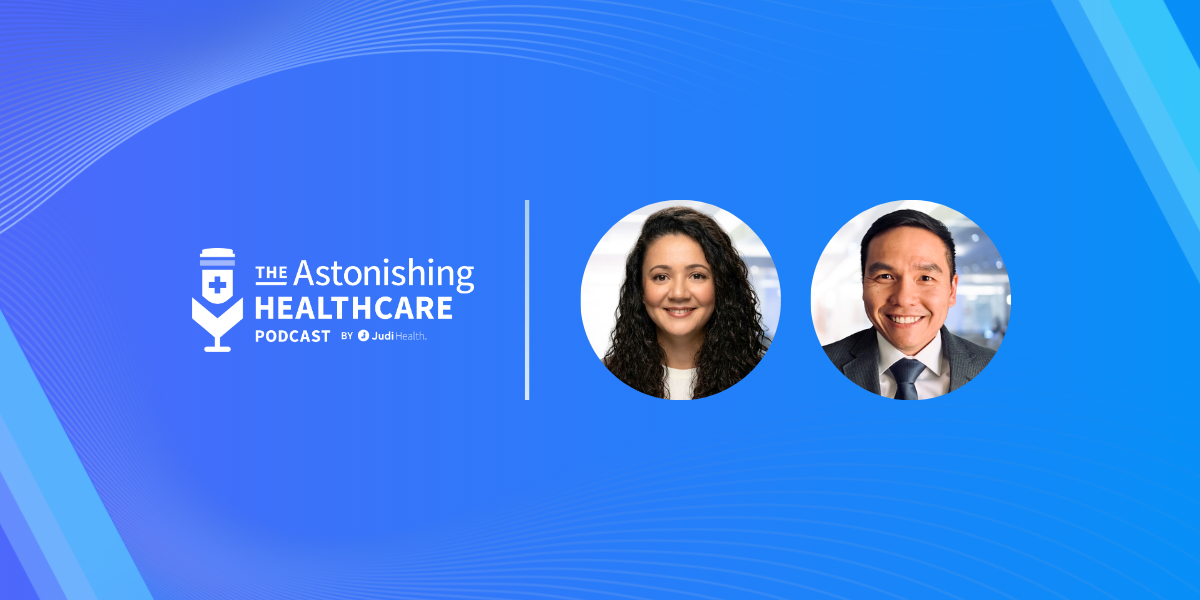
This episode of Astonishing Healthcare features three members of The Judi Group's leadership team: Jeff Hogan (Co-Founder & Managing Director), Chris Deacon (Director, Growth & Strategy), and Julie Selesnick (Director, Legal & Compliance). The Judi Group is a new venture - a premier advisory firm in healthcare on a mission to help companies evaluate the totality of their health vendors and contracts, deliver insights that lead to more responsible action, and ultimately improve the overall cost picture and health outcomes for their health plans and plan members, respectively. But why now? What steps can employer plan sponsors take to improve their contracting and access data? How do you set up a sustainable fiduciary process? For the answers to these and many more questions, like our guests' personal reasons for embarking on this journey, you'll have to listen in!
Highlights
- We've reached a boiling point - everyone is tired of how the US healthcare system operates,, the misaligned incentives throughout the supply chain, and the unnecessary complexity of it all.
- There's a growing willingness among employers to challenge the status quo, embrace transparency, and create customized benefit plans that better serve their unique populations.
- Jeff is driven - in part - by his experience as a public servant, Julie tends to fight for the underdog, and Chris is inspired by the opportunity to make a tangible difference in healthcare.
- The RFP process must be redesigned for each employer, with their unique needs in mind.
- Access to claim-level data is critical if employers are to fulfill their fiduciary duties, make informed decisions, and ensure prudent use of employees' healthcare dollars.
Transcript
Lightly edited for clarity.
[00:22] Justin Venneri: Hello and thank you for joining us for another episode of the Astonishing Healthcare Podcast. This is Justin Venneri, your host and senior director of communications at Judi Health. Today we're excited to be talking about The Judi Group, a new breed of employer advisory and consulting service that we just announced, but is independent from the pharmacy and health benefits administration business. We've been talking about all the challenges plan sponsors face and could use help with for a couple of years now on this podcast. And my guests have been working to help improve transparency and accountability in the healthcare industry for many decades, collectively.
Jeff Hogan is the Managing Director of The Judi Group. Julie Selesnick is Director of Legal and Compliance, and Chris Deacon is with us, also Director of Growth and Strategy. Also on the team, but not here, are Jason Olock and Christine Arnold, who are Director of Product and Innovation and Chief of Staff, respectively. This is a fun one too, as you've all been on the show before. Welcome back on.
[01:18] All: Thanks, thank you!
Introducing The Judi Group: Leadership & Mission
[01:19] Justin Venneri: Of course. I'll link the press release for The Judi Group in the show notes along with some other content that goes along with this discussion. Jeff, let's start with you. Your role at The Judi Group—tell us a little bit about that and can you share a quick background on yourself?
[01:33] Jeff Hogan: Thanks, Justin. Glad to be back on the podcast. I know I've been a guest many times. I've actually been an advisor for Capital Rx for a number of years. I've been in healthcare for 40 years—literally 40 years. It's a long time and I have worked in pretty much every area of the healthcare ecosystem, literally every area, from provider to analytics to working with employers and brokers. And I'll tell you, I think we've reached that proverbial tipping point where people have just had enough. They're disgusted with the American healthcare system. And I think my colleagues, this team that we're bringing forth here, feel likewise.
In fact, you can look at the body of their work in this space and I'll speak for all of us here today: we see this as a tremendous opportunity to do something about what this system looks like, to actually fix things, to do the transformation, to create the intuition that's necessary to drive those actions and change in the marketplace. So my role is to help to lead this organization with a team that is already inspired and has a body of work that is focused on actions and results and inspiring others as well.
[02:55] Justin Venneri: And that comes through loud and clear. Chris Deacon, over to you. You and Julie were on with us back at the end of last year actually with John Levitt, and that was a great discussion. Tell us a little bit about your role at The Judi Group and quick background for anybody that's not aware.
[03:09] Chris Deacon: Sure, I'll do background first. I'm an attorney by training and I'll say "recovering attorney." I've been in the public sector as well. I've worked at the Attorney General's office, I've worked in the Governor's office, Treasurer's office, all within the state of New Jersey, and actually ended up running the State Health Benefits Plan for over 720,000 covered lives. From there I started my own consulting firm and now I am very excited to join my colleagues here with me to dive in and start doing the hard work that I've been out there saying needs to be done. I'm ready and so excited about not just standing on stage, just talking about the fiduciary compliance and governance and contract review, but actually walking alongside employers and those that are trying to make the change and being part of that. And I think the moment is here and I know my colleagues agree.
[04:01] Justin Venneri: Julie, over to you. Director, Legal and Compliance. Tell us a little bit about your background and what you're excited about starting off here with The Judi Group.
[04:08] Julie Selesnick: Great. So yeah, I feel like I've been in health benefits for 40 years like Jeff said, but it hasn't been quite that long. But I started as actually a class action litigator. As time went on, my focus became more on health plans instead of just employee benefits in general. I started to do more consulting and counseling as part of my legal advisory roles. And actually last year I opened my own law firm to provide legal services to clients, realizing that litigating is a much more difficult way to make change than to change things on the front end. So I've been sort of moving backwards and trying to consult before the bad things happen and help avoid those bad things.
I've been relying on my new colleagues for years now and asking their advice and opinions and using things they've written. So I'm thrilled to be working with them now at The Judi Group to provide consulting services on a larger scale to employers that want to be part of the solution. Everyone talks about the problems all day long, but there are very few people out there trying to solve them. And I think all of us have already shown a commitment to doing that. And I'm really excited to doing that with my colleagues and still, when legal services are needed, still able to provide them through my law firm.
[05:20] Justin Venneri: Jeff, back to you. So continue with what you started in your intro. Tell us a little bit more about the "why" behind what you're doing here and why is The Judi Group set up the way it is—independent? And as Julie was just saying, it's different. Why is it different?
[05:34] Jeff Hogan: It's really interesting. Not only is the opportunity there, but the timing is interesting for us. It seems that the public has finally said, hey, we've had enough with the product and the system and the cost of the system and the lack of access and the lack of consistent quality and the huge variation in the consumption of capital. Almost 20% of our GDP is now consumed by healthcare costs without necessarily great outcomes. We've also seen obviously focus, particularly this year, on the BUCA(H)s [Blues, United, Cigna, Aetna, and sometimes Humana, too], who have become very integrated "supermarkets," if you will, who aren't producing necessarily products and services that produce predictable outcomes either.
So the notion is here again coming out of legislation in 2021. The Consolidated Appropriations Act of 2021 requires employers act in a fiduciary capacity, meaning they must use the money in these health plans to act in the best interests of their members—their employees—as well. And very few employers have any clue about what is needed in their own populations, even what's in their own contracts that they have with insurance companies and other vendors that constitute their health plan. So we realize that there's a huge need, if you will, for employers to have a partner who can help then systematically, not only to look at their contracts, but their data and all of their relationships to create insight into those things and help them to fix those things that create a lack of alignment between supply and demand. And also potentially in their own areas and their own catchment areas, to work with care delivery organizations to do direct contracting. There are just so many great opportunities to create insight for employers to help them to act more responsibly, to recapture capital, and systematically to have accountability in their plans. That's what's behind The Judi Group.
Contracts and the RFP Process: The Foundation of Control
[07:55] Justin Venneri: Got it. And one of the key things—I'll just dive right in—is access to contracts and data. We've been talking about this for so long and every time someone tells the story to me, off the record, on the record, I get stuff back like, "That's not what I asked for," or "I get stuff back and I don't know where to look in it," or "The definitions are different." There are all these problems. Right? So maybe starting off, can we talk about the contracts, the importance of definitions, the importance of removing gag clauses and making sure they don't show up again in some other way? Julie, what sorts of things are you going to do, or what can plan sponsors try to do to set themselves up for success this year and in the future as it relates to understanding existing or signing better contracts?

[08:36] Julie Selesnick: I love this question. They have to take five steps back to the RFP process itself. And if you are just having your same broker issue the same RFP and then doing the same negotiations you've always been doing, then you are not in the right place. This is where you can make change. You need to change your RFP process. You need to redesign what your RFPs ask and require to make sure that you're getting the types of responses from vendors that you can actually do business with and be legally compliant and contractually maximize your rights and abilities to get good prices and to manage your plan in accordance with the law.
And you also want to negotiate these important provisions as part of the process. You want to do this in advance. And I know Chris has put out a workbook on contractual provisions. I do a lot of work in this area. I know Jeff does a lot of work in this area on PBMs. I do it on the medical side. We've done it on the medical and PBM side, all of us. And there's so much you can get done if you make it a requirement for winning the bid. And that's how you have to do it. Because once you've agreed, that's it—you're done, you're contracted, and it's very difficult to make changes after that. So you really need to make a wish list, order things on what is important for year one, what's on our three-to-five-year plan. Because obviously you won't get everything at once. But that's, in my opinion, the number one way to start fixing your health plan: to go in with an overall approach. This is what I want my health plan to look like. These are the changes I need to make. How do we do that? Order it. And then you go into all of these RFPs with new vendors, potentially making sure that you get the things that'll allow you to achieve that plan.
[10:14] Jeff Hogan: Just piggyback quickly, Justin, on what Julie just said, and it's so important, especially working with employers. It could be a jumbo employer, it could be Taft-Hartley, could be a state employee health plan as Chris knows, could be a middle-market employer. We know that if we go out and ask an employer, "Hey, do you have a copy of your Administrative Services Agreement? This is what you have agreed to—the cost of things and specific provisions in contractual terms and what have you." And Justin, you've heard me use this term before. The normalized answer to that question is the "Labrador Retriever look." They look at you like you're crazy.
Most people don't have their own contracts. Think about that. You know, we ask CFOs all the time who often are the named fiduciary, who have personal liability around these things: In what other area of your business that you're running do you not even have your own contracts? Have you not looked at them? Have you not assessed the contractual provisions and the cost provisions and the implications and done due diligence around these things? This is the starting point. And not only is the Administrative Services Agreement critically important because it is expressing to the BUCAs and other TPAs your expectation, your needs, but most have never even looked at them as part of their process, whether they're changing from carrier to carrier. And as such, you don't even get out of the box. The gag clause thing is, "Hey, have you removed your gag clauses?" And again in the "Labrador Retriever look"—if you have gag clauses in your contract, you're not going to get your data around your group, what you're paying for services, the quality of those services, a whole bunch of stuff. You have no insight at all to come up with a strategy or a system to do better. That's the reality of our current situation. That has been normalized and that's what we want to change.
Related Content
- AH041 - ERISA Litigation Outlook and Meeting CAA Requirements: What Can Plan Fiduciaries Do?
- Health Benefits 101: The Importance of a Transparent PBM Model
- Replay - Unifying Medical and Pharmacy Benefits: The Blueprint for Better Employee Health and Wellness
- Judi Health Policy Pulse: 2025 Regulatory Roundup, the Push for PBM Reform
The Importance of Claim-Level Data Access
[12:25] Justin Venneri: And Chris, Jeff just mentioned it again, and you mentioned it in your opening. I know you had to dig into the procurement process and the data big time when you were in the Governor's office and your roles in New Jersey. What's the need from a data access analysis perspective for employers right now? Where do you start and what do you look to do to try to improve the decision-making, the access, et cetera, around this?
[12:46] Chris Deacon: I think as an industry, employers are at the beginning of that journey writ large of getting access to their data. But it is happening and it can happen. It will happen slowly and then all at once. In my opinion, I think that that's how it's going to play out. We haven't reached "all at once" yet, but the need for the data—and when I say data, I know that that is a very loaded term. Not all data is created equally. I'm not defining the term because we're on a podcast, but it's very, very important that you define when you say "data" what you mean. And I am referring to the 250 fields claim line level data.
Why is that so important? Going back to Jeff's point, as an employer, you are exercising control over somebody else's money. When those premiums come out of your workers' paychecks, thereby triggering your fiduciary duty. When you are exercising control over their money, you have to act in a very, very specific way when it comes to duty of loyalty and prudence and paying only reasonable plan expenses. None of those things can be achieved if you do not know who you're paying, know how much you're paying, and know what you're paying for. I mean it's sort of elementary, but that's why the data is so fundamental. But then you build on that, right? You build in quality, you build in predictability. Our employers are investing tens of millions, hundreds of millions—in the case of the state, billions—of dollars in healthcare services. They're not buying insurance; they're buying healthcare services from the market through an intermediary. We need to help them procure those services in an efficient and intelligent and prudent manner. And as you might be able to tell from my excitement here, like I can't wait to take this journey with the employers that we're able to work with.
What's Your Why? Personal Motivation to Fight for Change
[14:37] Justin Venneri: I'll build on that. Maybe a fun question just to mix it in here, talking about the problems. Want to try and switch it a little bit? It's a lot of work that you guys are embarking on right now. Jeff, you started off with a bit of the "why" and the opportunity, but what's your real "why" for why you're doing this? As Mike Tait always explains and asks in meetings—and Mike Tait was on the podcast twice last year, so for anybody that doesn't know, I can link that in the show notes. But he is always talking about the why. Why are you doing things? Why are you going on this journey? So Jeff, maybe go first, what's the why here?
[15:05] Jeff Hogan: I'll be a little idealistic here and I tend to be a direct person, but my background and experience—I started my career as a police officer. I put myself through college and graduate school as such while running businesses, healthcare businesses. I was the mayor of my town as well, about 30,000 people here, got a unique perspective on that, seeing what the cost of healthcare has as an effect on wages as well. I was a fire chief in town prior to being the mayor as well. You see first responders whose wages are pushed down because of what they're having to pay for healthcare. And now I'm a grandfather of four grandkids under age 10. And I look at what healthcare is doing not only to our economy, but lack of access and continuity. Look at behavioral health access after COVID and things like this. It's a confluence of things for me. I've had a successful career, but I'm agitated. That is the motivation right now. And working with this team, I'm just... I can't tell you how excited I am to be with people who see the same opportunity right now to influence change, real change that will make this thing better. That's the straight-up answer. That's my motivation.
[16:28] Justin Venneri: Love it. Julie, over to you. How about, what's your answer to the why here?
[16:32] Julie Selesnick: So, also agitated. But I really... so I'm always usually on the side of the little guy in any fight. I just, I take the side of the underdog. Which is why for many years I was focused on bringing class action lawsuits against big entities on behalf of a group of people. And now I'm focused on helping employers and participants—so basically the entire population, or at least more than 163 million Americans—as they are sort of held hostage in a system to a handful of the largest companies in the United States and in the world, really. And it's just so frustrating that there's this complicated, over-complicated set of rules that make healthcare seem like this unsolvable morass. And it's not. It doesn't have to be this difficult. It's not this difficult.
And I'm excited to work with people who see that and want to sort of strip away a lot of the chaff and just make it easier and make it more direct. And when you strip those things away, you're also stripping away a lot of the waste, a lot of the cost that goes into it. And going back to the building blocks, it really is a sort of "start from scratch" kind of thing where everyone needs to get in a different mindset of how we're doing this. Who is that covered entity? Who's the service provider? We all need to get that straight. And it does feel like things are changing all of a sudden. And so it's exciting to be with a group of people who also feel that way and see this is a time to sort of seize the day. And if this were sort of the five stages of grief that companies that have been running things have been going through, I'd say they've gone through denial, we're pretty much through anger. And we're now bargaining. And they're trying to sort of, "Okay, you want your data, it's going to cost you a bunch of money or we're going to charge you either a lump sum or each time." So I think we're pretty close to the end of bargaining, looking forward to seeing depression and then acceptance. So we're halfway there and I think with all of us together, we can make a big push and really get to a better place soon.
The "Fainting Couch"
[18:19] Justin Venneri: I love the way you describe things. I mean, I think at the end of the episode I mentioned earlier you [said you] have a fainting couch. Do you still have that? Is that necessary?
[18:26] Julie Selesnick: This morning, just this morning, I was reading a new case filed against Express Scripts by Albertsons and all of their supermarkets where they say that Express Scripts charged all of the members that picked up their drugs for brand drugs and then later only reimbursed their pharmacies—the Albertson pharmacies—at generic prices. A new "flip" type of situation. And again, every single day or at least once a week I hear of a new practice or something that causes me to clutch my pearls, go to the couch and really have the vapors for a little while. But it's good because you never know everything. And every time you find something out, you think of a new contract provision you need to put in to make sure that doesn't happen to you. And so now I just keep a little journal like, "Oh my goodness, I had no idea anyone would even attempt to do this. Add this to your contract." But yeah, always on the fainting couch.
[19:19] Justin Venneri: And Chris over to you for this if you want to elaborate. You started to explain some of it in your previous answers, but your why?
[19:26] Chris Deacon: I think thanks for letting me go last because I think it helps if you listen to each of us. I think you see personalities that, in Jeff's case, not just figuratively but run towards the fire. We run towards the need. And I know my personality, I've always done that. I don't turn away and run from scary things. My entire life I've turned towards them and run at them full steam. When I first started working in healthcare, I saw that this is a place where my skillset, my passion, and my time could be spent making a difference and sort of, they all met up and that's where I've decided to sort of dedicate my energy. So yeah, I think that's the why for me. And obviously I have kids. I want to leave them a better future. But I think there's no other sector right now, specific sector, where I believe that I could make this much of a difference. I mean, we're talking about 20% of the GDP. I always used to tell my staff at the state, we might not be changing the world, but here we are changing the world for one person today when you're working in this space, because we can't forget it's about people accessing healthcare. So that's my why. And I think, again, all of us are... we see a challenge, and we don't turn around and look for something easier. We see a challenge and we say, I'm gonna go take that on.
Fiduciary Responsibility: Setting up a Process
[20:52] Justin Venneri: And one of those challenges is kind of taking a look at that Consolidated Appropriations Act, the way you've described fiduciary responsibility and processes and some of those set up for people. Julie or Chris, if you want to take it and just continue, could you talk a little bit about setting up the fiduciary process and just surface level, at least thinking through some steps you could take to get on the right path there and how that helps in the grand scheme of things?
[21:15] Chris Deacon: I'll sort of give a framework and I'll let Julie maybe go through the more particulars. But I think it's important to remember that being a fiduciary is not about a checklist, and it's not just about having a specific committee. It's not only something you do, it's something that is part of the ethos of the company, whomever is running the benefits. It is foundational, and it's a set of principles that should underpin every decision you're making. But with that, Julie, I'll let you sort of... what are the ways that you can display those principles?
[21:53] Julie Selesnick: I think that is really a great start. And it's all about having the right process in place. Being a good fiduciary is about the process you undertake to make decisions, handling other people's money and making decisions regarding other people's health. You have a fiduciary obligation to act prudently and loyally. What does that mean? It means that you have to make sure that you're only paying reasonable costs using plan assets, that you don't have conflicts of interest in your plan, that if you're not an expert in something, you rely on experts or advisors that you have a good faith belief know what they're talking about.
But at base, it comes down to every decision that you're making that is going to involve other people's money—you have to go through a process and reason it out and have a defensible explanation for why you made that decision. So it doesn't mean you always have to be right. It means you always have to be thoughtful. And you can see right now there's a huge panic because of these new voluntary benefits lawsuits that got filed a couple weeks ago by Schlichter Bogard. And this feels sort of out of nowhere to a lot of employers. And that's because employers have not been treating voluntary benefits as part of their fiduciary process. They thought there was this sort of safe harbor for this. If you have a really good fiduciary framework in place, then you're probably not in that situation where you're panicked by it because you're already treating those benefits as if they're subject to ERISA or whatever federal law or state laws govern you.
So it really is about having a process in place to ensure that any decision you make that involves other people's money—your employees' money, their deferrals to the health plan that's part of their salary. And so you have to always be cognizant that you have to have a good process in place, that you're prudent and loyal. And loyal means that your service providers are loyal. So you have to look for conflicts of interest there. You have to make sure that there's not indirect compensation that's coloring the suggestions that you get to hire certain service providers. So those are the kind of things that the CAA has tried to help and give employers tools to unearth, and now it's up to employers to run with that and use those tools. And it's hard, it's not easy because you still run into a lot of interference. But it's a lot easier now than it was five years ago to get data, get a compensation disclosure, find things out in general that were basically inscrutable, even five, six years ago. So the environment continues to improve, and the more it improves, the better fiduciaries everybody can become.
Total Benefits Strategy & Direct Contracting
[24:16] Justin Venneri: And Jeff, just to make sure it's clear, this is the totality of benefits. It's health benefits, pharmacy benefits, other. It's the total benefits program that we're talking about improving here. Do you have anything you'd add on attacking costs or to build on what Julie was just explaining?
[24:30] Jeff Hogan: Yeah, so this is about everything, any type of benefit that is offered to a member has to be taken into consideration. And we know just with working with employers out there right now, especially since COVID, that they've tried to solve problems that were not taken care of by traditional means. What are traditional means? "Let's go out and buy a BUCA network plan." That network plan was a blunt instrument, literally. That isn't necessarily providing services in the best interest of that unique population, that unique population's needs. It's really the confluence of events right now. What do we mean by this? Let's just look. Since COVID we know that only about 50% of the need for behavioral health is provided by networks. So what did employers go out and do? They're trying to find point solutions and other people that you can slap onto their plan that may not be integrated into their data. And we don't have accountability for what have you. It's a perfect example of how that legacy solution is not solving the problems appropriately of employers.
So yes, what are the things that we need? What is your process for discovering that? If we're talking to a CHRO right now, they're telling us about 15 or 20 or 30 point solutions outside of their plan that they just think that their employees need, but we don't even know if they work. So that is part of what we need to do as well, number one. But number two, on the care delivery side, the care delivery side has been managed by the same BUCA from a network perspective. We have this beautiful authentic opportunity to help employers to locate care delivery directly that is in the interest of their employer group. The variation in cost and quality on high-volume episodes of care—knees and hips and babies and shoulders and CABGs—is huge. The huge variation in cost and quality. There are opportunities as part of what The Judi Group will do to help the employer to identify the appropriate care delivery vehicles for them that may not be network plan options, that are directly contracted as episodes of care or APM or whatever. This is the opportunity that we have right now.
An Astonishing Opportunity to Improve Transparency & Accountability
[27:07] Justin Venneri: What better time than now, right Jeff? So that's great. I'll just go right to the last question. You guys have been generous with your time, really appreciate it as always. Julie, starting with you on this one, instead of a most astonishing thing: when you think about everything we've seen, everything you're working on, what do you think is the biggest opportunity to improve transparency and accountability in the health benefits space?
[27:27] Julie Selesnick: I think that I'm amazed at all of the new ideas that I see emerge from all different size employers and other vendors in the market every day. And I really see a willingness now to sort of be brave, carve things out, create better benefit plans. And that's the opportunity: to create something that fits what your group of participants needs, not the cookie cutter that Jeff was just talking about that we all used to just accept—the off-the-shelf plan—but the plan that you need. And I think that there's never been a better opportunity than right now to do that. And I see a real increased willingness on the part of plan sponsors to engage in that. And so I think that's a huge, big game changer.
[28:08] Justin Venneri: No, that's great. And Chris, over to you. Same question. Send us off with your version of the most astonishing thing or most interesting opportunity you see to improve things out there.
[28:16] Chris Deacon: Well, I think Jeff alluded to this and I think we're seeing a move in that direction. But it's this opportunity largely because of additional transparency. And we're a long way from being a transparent healthcare industry. But we are beginning to see that the emperor has no clothes when it comes to value and the value delivered by some of the middlemen that we've been entrusting with our money, with our employees' money, and to do the best for us. And we are seeing that that's not the case. And when those eyes are opened and we're having these aha moments more and more with C-suites and CHROs and business leaders across the country, their next question to me is: "Who do I call? What do I do?" Because their traditional consultants and brokers are part of that chain, they're part of that middle layer. I don't know if I'm answering the question, but what's exciting about this venture is I haven't been able to say for a long time, "Here's my card. Let's take that journey together." But I'm excited to do that.
[29:23] Justin Venneri: And Jeff, send us off. This group is assembled. You guys are moving forward. What do you think the biggest opportunity is? Or what do you think if we sit back in a year or two years and look, what do you think the most astonishing thing will have been that's been accomplished?
[29:39] Jeff Hogan: We've already seen employers taking action. Those "first followers," the ones who jumped on board quick. And a lot of them were Fortune 500 companies and publicly traded companies and Taft-Hartley groups actually did stuff. I'll tell you my takeaway here is that every single group can do something that has huge impact quickly. That is what I would say as the denouement here, is that I have not seen a group that we have looked at—small, medium, large, publicly traded, public sector or what have you—that couldn't just, with a little bit of insight, quickly cure their problem or recover assets quickly. And I will tell you that it feeds on itself. Once an employer has gone through a process, looking at their PBM or their rebates or their contracts and what they're paying for shared services and seeing how quickly and efficiently it can be fixed to benefit their members, there's no stopping. That's where we are.
[30:48] Justin Venneri: Awesome. Jeff, Chris, Julie, thank you so much for taking the time today. So excited and we look forward to circling back in the future and seeing how things have gone.
[30:56] Jeff Hogan: Thanks Justin.
[30:56] Chris Deacon: Thanks Justin.
Questions for The Judi Group team? Email Inquiries@judigroup.com.
Interested in transitioning to an aligned and transparent pharmacy and health benefit partner? Click here to get in touch with our team!
Disclaimer
This podcast is for informational and entertainment purposes only. The views expressed are those of our guests, do not constitute professional advice, and may not represent Judi Health's/Capital Rx's position on any matters discussed. We make no representations or warranties regarding the accuracy or completeness of the content; information is subject to change and may not be updated.


.webp)
.webp)

%2520(1).webp)