Healthcare Data Analytics: How Plan Sponsors Can Turn Data Into Action
.png)

.webp)


Healthcare generates an incredible amount of data, with every patient encounter creating a trail of information, from claims and prescriptions to eligibility, utilization, lab results, and other clinical information. But more data doesn’t necessarily make it easier to understand what’s happening across a plan.
For plan sponsors, the problem is often knowing where to look and what to prioritize. Valuable insights can be buried across systems and reports, making it harder to spot opportunities, identify emerging issues, or make confident decisions about benefits.
Healthcare data analytics can help close the gap, turning information already flowing through a health plan into insights that are easier to use and act on.
What Is Healthcare Data Analytics?
Healthcare data analytics is the process of collecting, organizing, and analyzing healthcare data to identify patterns, trends, and opportunities for action.
For benefits teams, healthcare data can include:
- Medical claims
- Pharmacy claims
- Eligibility and enrollment data
- Healthcare utilization
- Prior authorization activity
- Clinical program data
- Provider information
- Benefit and plan design data
Each type of healthcare data can provide insight into different aspects of a member’s care and benefit experience: medical claims can show what services members are using, pharmacy claims can reveal medication utilization and spending insights, and eligibility data can help define the population being analyzed.
Bringing information across data types together can make it easier to see relationships that are harder to spot in isolation. A shift in utilization, for example, can look very different when it’s viewed alongside changes in spending, medication use, or the population being served. Making those connections possible requires systems that can exchange and use information effectively. This is where interoperability comes in.
The Office of the National Coordinator for Health Information Technology (ONC) defines interoperability as the ability of systems to exchange and use electronic health information without requiring special effort from the user. In practice, interoperability gives different types of healthcare information a way to work together instead of leaving each dataset in its own silo.
When information can move between systems and be viewed together, benefits leaders have more context for understanding what’s happening across a plan and where action may be needed.
How Is Data Analytics Used in Healthcare?
For plan sponsors and benefit leaders, the questions can evolve as they dig deeper: What happened? Why did it happen? What’s happening now? What should we investigate next?
That progression can help teams:
- Spot emerging trends
Changes in utilization, prescribing, spending or other patterns can reveal trends that may need attention Looking at data over time can help distinguish a temporary shift from a change that may require a response.
- Identify gaps in care
Claims and clinical data can reveal opportunities related to preventative care, medication adherence, chronic condition management, and other areas of member health. Population-level analysis can also show where those gaps are concentrated.
- Measure the impact of a benefits strategy
Analytics can show what happens after a plan design change, clinical program, formulary decision, or other intervention. The Agency for Healthcare Research and Quality’s (AHRQ) Quality Indicators are one example of using standardized measures to track clinical performance and outcomes over time.
- Compare populations and patterns
Healthcare use can vary considerably across populations. Age, health conditions, medication use, benefit design, and other factors can shape how and where people receive care. Comparing those differences can reveal trends that may be difficult to see when looking at the overall population on its own.
Used well, data analytics can become part of how an organization evaluates its strategy, manages its resources, and responds to changes across its population. Historical data can show where costs or utilization have changed, while current and emerging patterns can help plan sponsors anticipate needs and evaluate their strategy with more context.
How Can Healthcare Data Help Plan Sponsors Make Better Benefits Decisions?
Benefits decisions often come with assumptions. A change in spending or utilization may have multiple causes, and the data needed to sort through them can sit across claims eligibility, clinical programs, pharmacy, and other sources. Without enough visibility, it can become difficult to know which signals deserve more scrutiny.
Access to the right data gives plan administrators a stronger basis for evaluating what they’re seeing. It can help them assess what’s contributing to costs, evaluate whether an existing approach is delivering the expected results, and determine where a different approach may be needed. Having the right data is only part of the equation; knowing what to look for and how to analyze it is what makes the information actionable.
Being able to read the story of your data gives to the ability to say, ‘I’ve got trend issues.’
– Bridget Mulvenna, Vice President, National Business Development
Confidence in the data matters because a finding can mean different things depending on what else is happening. For instance, a cost change may call for a different response depending on what’s happening with utilization, the population affected, or the strategy already in place. When employers have a full view, they can make changes that respond to how members are using their benefits, where they may be encountering barriers to care, and what support could make navigating the plan easier.
One source is prescription data, which can provide important detail on medication use, utilization, and spending. Medical claims, eligibility information, and clinical data can add further context when a question extends beyond pharmacy. Looking across these sources can help investigate cost and utilization changes, evaluate programs, and determine where additional analysis may be helpful.
Better benefits decisions come from having the context needed to evaluate available options, rather than drawing conclusions from one data point.
How Can Medical and Pharmacy Data Work Together?
Medical and pharmacy data can answer different questions about the same member or course of treatment. Viewing them together gives benefits leaders more information about how care and spending relate through integrated medical and pharmacy benefits.
Consider a member receiving ongoing treatment for a chronic condition. Medical data can show diagnoses, procedures, and services, while pharmacy data can show medication adherence.
Having access to multiple sources of healthcare information doesn’t necessarily make it easier to use. Clinical Architecture’s 2025 Healthcare Data Quality Report found that 82% of healthcare professionals are concerned about the quality of data they receive from external sources, while only 17% said they’re currently integrating patient information from those sources.
Seeing medical and pharmacy activity can help employers:
- Understand what’s driving utilization
A change in pharmacy spending can take on a different meaning when viewed alongside medical services, diagnoses, or changes in the population receiving care.
- Identify where intervention may help
Seeing medical and pharmacy activity together can help determine whether a clinical program, benefit change, or other strategy addresses the issue being noticed.
- Evaluate whether an approach is working
Once a strategy is in place, teams can use data across benefits to assess what changed and whether the results align with what they expected.
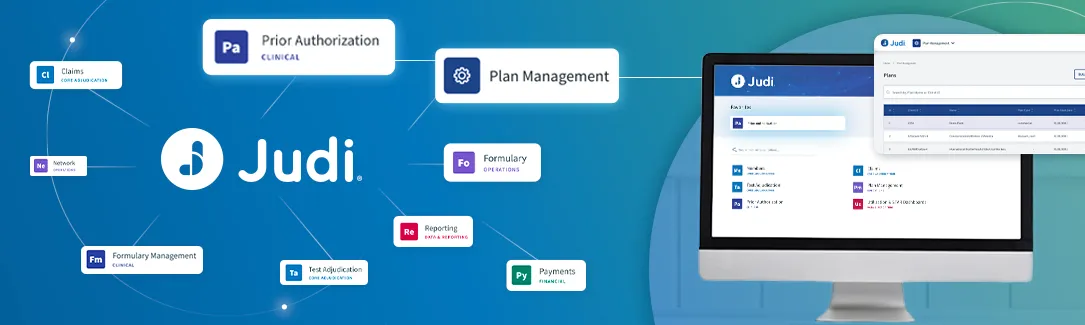
Bringing medical and pharmacy information together requires more than having access to separate datasets. The underlying benefits infrastructure also needs to make information accessible across the areas being evaluated. A unified approach to health benefits administration, like Judi Care™, brings medical and pharmacy benefits into the same administrative framework.
The value of a unified benefits administration platform extends beyond what plan sponsors can see in the numbers. At the population level, teams can track changes in utilization and spending, while at the member level, the same information can help identify opportunities to support care navigation, more appropriate care, and a better benefits experience.
What Should You Look for in Your Healthcare Data?
More data isn’t automatically better. A sophisticated dashboard won’t solve a visibility problem if the underlying information is fragmented, delayed, or difficult to interpret. When evaluating healthcare data analytics capabilities, a few fundamentals matter:
- Accessible data: benefits leaders can get to the underlying information, not just a summary or report.
- Timely information: Data is available while it can still inform a decision, rather than months after the fact.
- Specific information: Data is detailed enough to answer the question being asked, rather than relying on broad measures that may obscure what’s driving a change.
- Integrated data: Relevant information across medical, pharmacy, eligibility, and other benefit areas can be viewed together.
- Transparent data: employers can understand where information came from and how it was calculated.
- Actionable insights: Analytics help decision-makers see what changed, why it changed, and what they can do about it.
How to Act on Healthcare Data Analytics
Once plan sponsors have access to the right information, healthcare data analytics can help turn that information into practical decisions across the benefit. Use it to:
- Pinpoint what’s changing. Identify shifts in spending, utilization, prescribing, care patterns or member experience that may require further evaluation.
- Determine what’s driving the change. Bring medical, pharmacy, eligibility, clinical, and other relevant data together to separate a meaningful trend from a one-off change.
- Evaluate the response. Use data to compare options, assess a benefit strategy or intervention, and measure whether it’s producing the intended results.
- Act on what the data shows. Apply those findings to benefit design, vendor oversight, clinical strategies, member support, or other areas where a change can improve the plan.
Healthcare data analytics becomes valuable when the information can be interpreted in a way that supports better decisions for the plan and the people it serves.
Turning Healthcare Data Into Better Decisions
Benefits teams make decisions that shape how people access and use their coverage. Having the right information behind those decisions can help create a benefit that works better for the organization and feels easier to navigate for members.
See how Judi Care™ brings benefits administration and healthcare data together.

.webp)