How Modern Technology & Aligned Partnership Can Address Waste In the U.S. Healthcare System
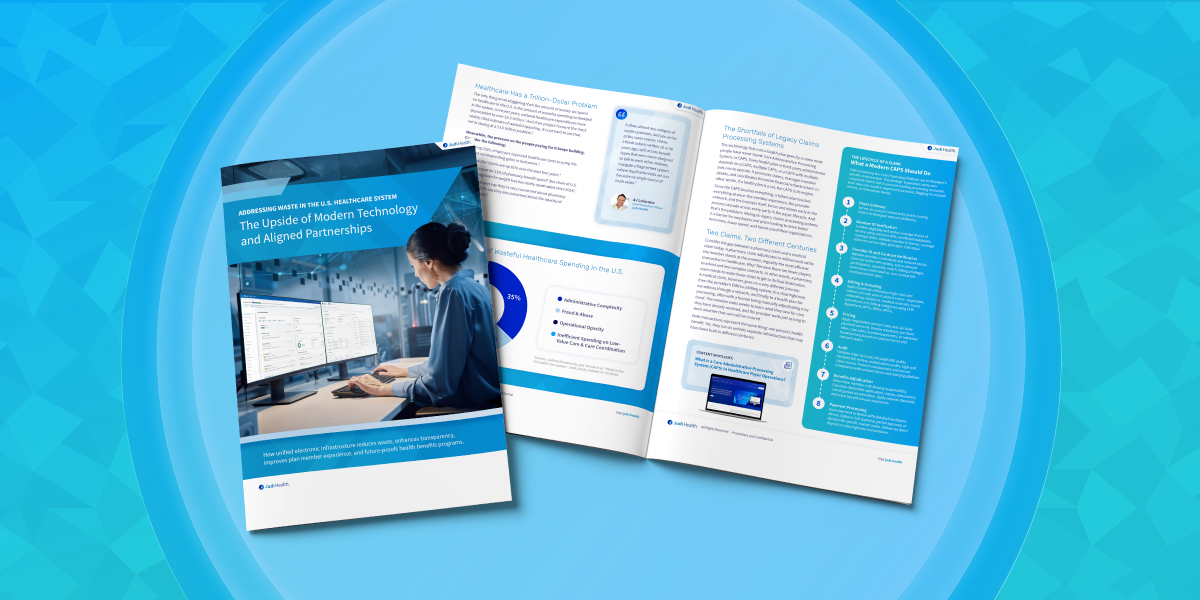


If there's more than $1 trillion dollars of waste in the U.S. healthcare system, what, if anything, can help address the problem? Check out our new free eBook, The Upside of Modern Technology and Aligned Partnerships, to learn:
1. Where the waste is hiding: Administrative complexity alone accounts for at least a quarter trillion dollars of annual healthcare waste, the single largest category.
2. Why opacity is built in: Shifting to a transparent, fixed payment model for PBMs would reduce annual spending by nearly $100 billion, a 2025 study found.
3.. What the point solution problem costs: 42% of benefits leaders manage eight or more digital health vendors, and the median cost just to manage those vendors runs $580,000 on top of the benefits budget itself.
4. How to choose an aligned partner: Most health plans and TPAs switch their CAPS once, maybe twice, ever. Learn the key questions on data visibility, integration capability, configurability, and scalability.
Why Healthcare's $1.5 Trillion Waste Problem Starts with Outdated Technology
U.S. healthcare spending has climbed past $5.3 trillion. We think wasteful spending adds up to a $1.5 trillion problem. Employers entered 2026 expecting costs to jump 9%, and million-dollar claims are up 61% over the past four years. Here's the catch: much of that waste traces back to one place few people think about.1,2,3,4

Follow almost any category of waste upstream, and you arrive at the same source: claims infrastructure, written 20 or 30 years ago, split across benefit types that were never designed to talk to each other." — AJ Loiacono, Chief Executive Officer, Judi Health
Where the Healthcare Dollars Go
In The Upside of Modern Technology and Aligned Partnerships, we break the trillion dollars apart, and a pattern emerges. The biggest buckets of waste are the ones fragmented, legacy infrastructure creates. Administrative complexity alone accounts for at least $266 billion of annual waste. Opacity is built in, too, with data hidden across both medical and pharmacy benefits.
The Engine Most Plans Rarely Question - The CAPS
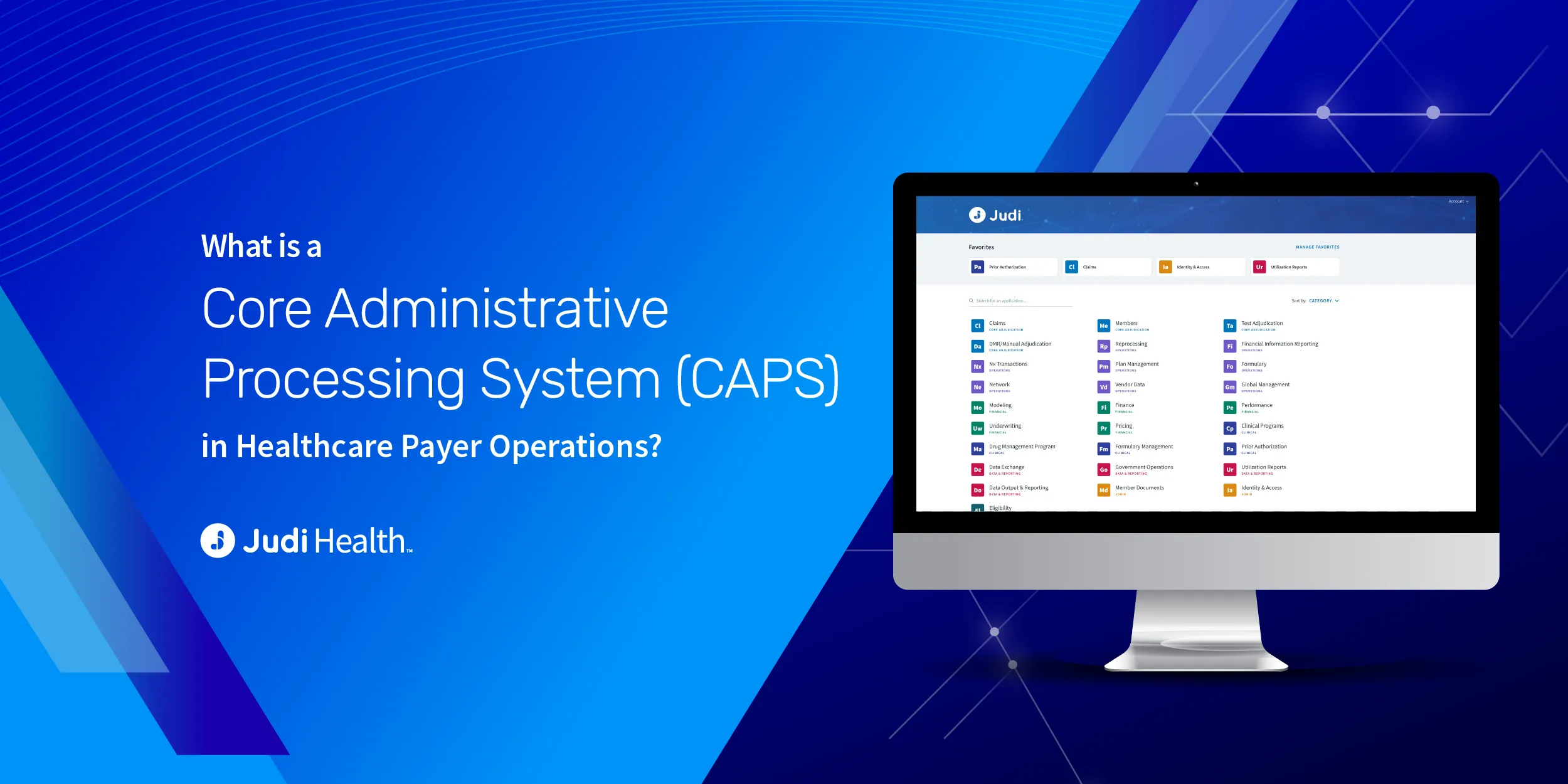
Every health plan and third-party administrator depends on a Core Administrative Processing System, or CAPS. If a health plan is a car, the CAPS is its engine. Most plans switch theirs once, maybe twice, ever. That makes the choice matter more than almost any other technology decision they'll make. And when the core system can't do the job, employers bolt on vendors to compensate. Soon the patch becomes its own source of waste.
What You'll Find Inside
The eBook goes further. It looks at how misaligned incentives compound the problem. It also covers the questions to ask when evaluating a partner, and what running a modern benefits plan can look like.
Download the eBook today!
Get in touch with our team if you'd like to learn more about licensing Judi® or our full-service solutions!
References
1. NHE Fact Sheet | CMS. Centers for Medicare &Medicaid Services (CMS). https://www.cms.gov/data-research/statistics-trends-and-reports/national-health-expenditure-data/nhe-fact-sheet
2. Shrank, W. H., Rogstad, T. L., & Parekh, N.Waste in the US Health Care System: Estimated Costs and Potential for Savings.National Library of Medicine. https://pubmed.ncbi.nlm.nih.gov/31589283/
3. Business Group on Health. 2026 Employer HealthCare Strategy Survey. https://www.businessgrouphealth.org/resources/2026-employer-health-care-strategy-survey-executive-summary
4. Sun Life. Cancer still tops high-cost healthclaims but muscle and orthopedic conditions are making surprise surge: Sun LifeReport | Sun Life. https://www.sunlife.com/en/newsroom/news-releases/announcement/cancer-still-tops-high-cost-health-claims-but-muscle-and-orthopedic-conditions-are-making-surprise-surge-sun-life-report/123968/